
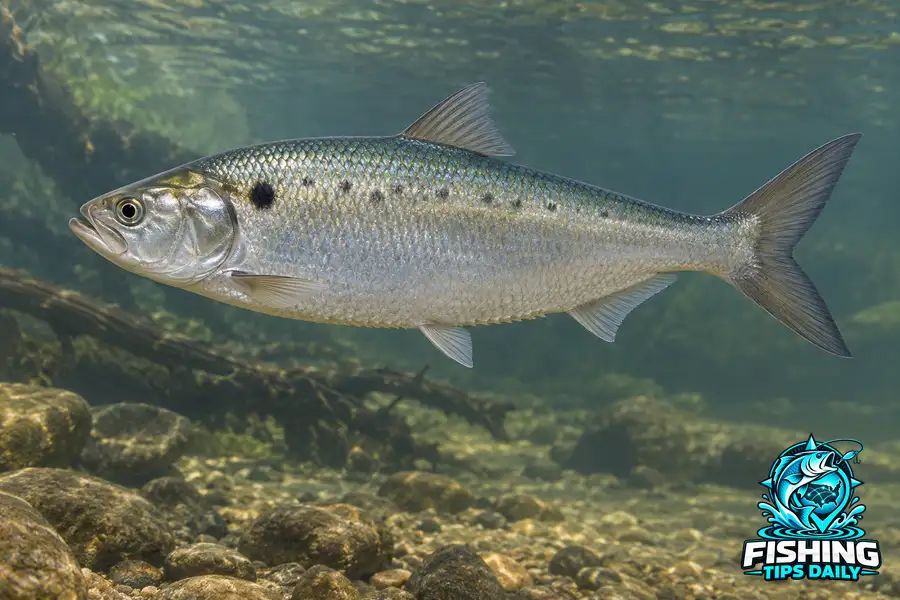
Coastal Distribution
The western Atlantic range extends along the eastern United States toward Florida. Adults form coastal schools and enter estuaries and rivers during the reproductive season. An inland observation can therefore represent migration rather than a population that lives permanently in fresh water.
Spawning Movements
Adults move upstream to spawn and later return toward coastal water. Timing differs among rivers; spring spawning observations from one watershed are not a universal calendar. Young subsequently move downstream, linking the nursery period to access through the river and estuary.
Feeding and Measurements
Small fish, squid, crabs and other crustaceans are recorded foods. The compiled maximum is sixty centimeters standard length, which excludes the tail fin. Keep that convention attached to the number when comparing a measured fish with a total-length value from another source.
Keep the River and Season
The river name and observation date help explain a Hickory Shad record, especially during movements between coastal water and spawning habitat.
All Lakes With Hickory Shad
Browse lakes and reservoirs with documented Hickory Shad records, listed alphabetically. Records do not establish current abundance or public access. Check the evidence and managing authority for the water you choose.
Showing 1–1 of 1 lakes · Page 1 of 1
- Chapmans Pond Lower Connecticut River Valley, CT