
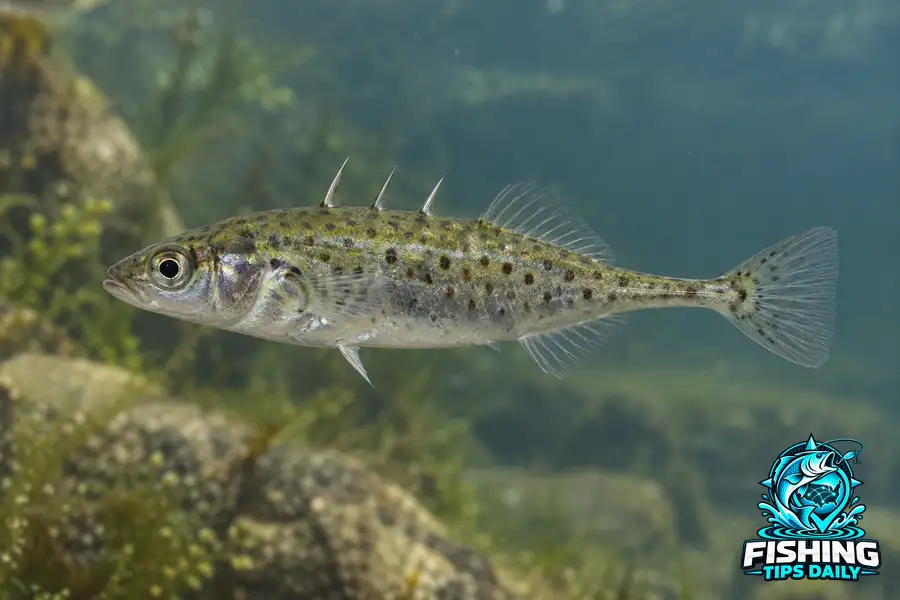
Identification
Three separate dorsal spines make this fish resemble Threespine Stickleback. A pointed projection at the base of the pelvic spine, a small number of side plates and the absence of a keel along the tail base help distinguish it. Its dark spots can be faint outside the breeding season.
Size and Weight
The agency size account reports an upper length of three inches, about 7.6 cm; one to two inches is more usual. No dependable maximum individual weight was established. Measurements from Threespine Stickleback are not interchangeable with those of this species.
Coastal Habitat and Feeding
Vegetation in tidal creeks and estuaries provides its characteristic setting. An eastern Canadian feeding study found planktonic copepods, cladocerans and other minute items in the diet. Comparisons with neighboring sticklebacks showed that mouth size influences which prey can be swallowed.
Seasonal Life and Observation
Fish enter brackish water to spawn in late spring and rarely move into entirely fresh water. Small-mesh dip nets and seines are documented survey equipment. This profile does not identify a recreational bait or lure fishery for the species.
Spots That Stand Out in Spring
The ordinarily silvery body becomes yellow-green during spawning, and its dark side spots become easier to see. Seasonal color changes explain why two observations of this little fish can look surprisingly different.
All Lakes With Blackspotted Stickleback
Browse lakes and reservoirs with documented Blackspotted Stickleback records, listed alphabetically. Records do not establish current abundance or public access. Check the evidence and managing authority for the water you choose.
No published lakes are currently linked to this species in our confirmed records.