
Identification
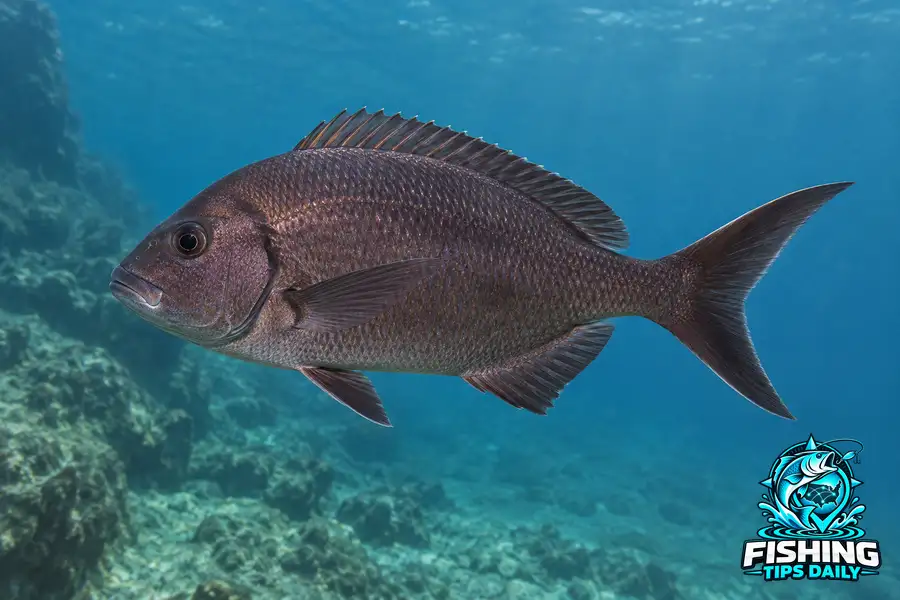
Apsilus dentatus has an elongated oval body and a continuous dorsal fin without a deep dividing notch. Adults are darkest around the head, while small juveniles can be vivid blue. The common name also gets used for other snappers, so the scientific name matters.
Size and Weight
Reported maxima are 65 cm total length and 3.2 kg, about 25.6 inches and 7.1 pounds. A common length near 40 cm is a better indication of an ordinary adult than the maximum figure. The length and weight limits are separate summary values.
Habitat and Natural Food
Hard-bottom areas from North Carolina into the Caribbean support this marine predator. Records span roughly 12–300 m, although it is usually deeper than 40 m. Its diet includes bony fish, mobile crustaceans and squid or other cephalopods.
Fishing Context
Its offshore habitat distinguishes this fishery from fishing for mangrove-associated snappers along shore. The verified information does not establish one best bait or lure for Apsilus dentatus. A catch recorded simply as “black snapper” should be identified before its tackle advice or trophy measurements are applied to this species.
From Blue to Almost Black
A young Black Snapper can look strikingly unlike the dark adult suggested by its name. Body shape and fin structure remain useful clues as its coloration changes with growth.
All Lakes With Black Snapper
Browse lakes and reservoirs with documented Black Snapper records, listed alphabetically. Records do not establish current abundance or public access. Check the evidence and managing authority for the water you choose.
No published lakes are currently linked to this species in our confirmed records.