
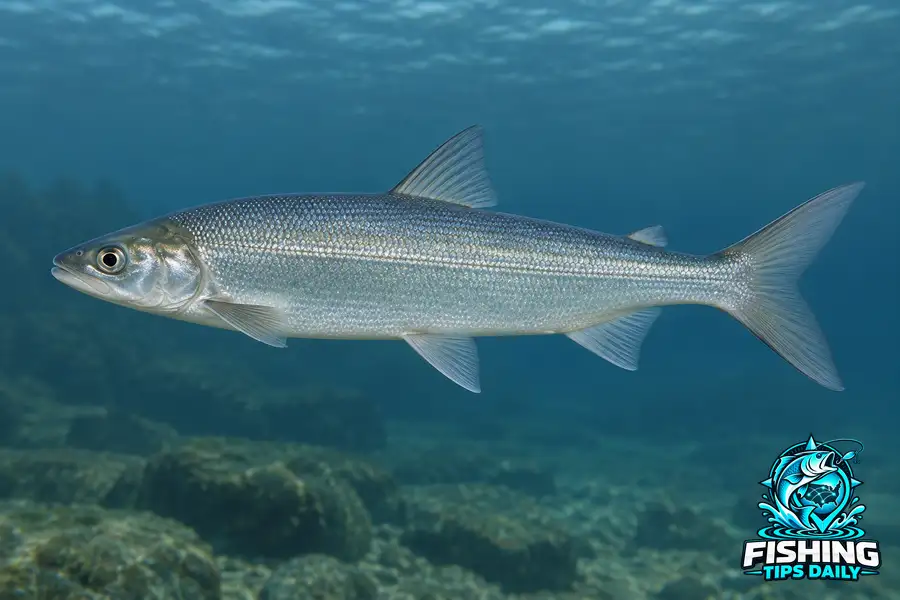
Identification
Pale, nearly colorless pelvic and pectoral fins distinguish Bering Cisco from Least Cisco. Separation from Arctic Cisco requires closer examination, including the lower number of gill rakers on the first arch. Its dark back contrasts with bright silver sides.
Size and Weight
A Canadian assessment reports adults reaching 48 cm fork length, about 18.9 inches measured to the fork of the tail. A traditional-knowledge report records fish of 4 pounds in the Yukon. This is a reported regional large weight, not a certified worldwide record. A migration sample averaging about 600 g should not be confused with a maximum.
Habitat and Natural Food
Young and adults feed in coastal and estuarine waters on amphipods, other invertebrates and small fishes. Mature fish enter rivers for autumn spawning, and adults stop feeding during the spawning migration. These movements make estuaries and long stretches of river parts of one life cycle.
Fishing and Community Use
Bering Cisco are important to subsistence fisheries in coastal and lower-river communities. Their value as a harvested fish does not establish a universally effective sport-fishing lure. Fishing methods and access depend on the applicable local fishery.
A Small Fish on a Very Long Journey
The upstream journey is extraordinary for a medium-sized whitefish. It carries fish from coastal growing areas to distant freshwater spawning habitat, making passage along the river essential to completing the cycle.
All Lakes With Bering Cisco
Browse lakes and reservoirs with documented Bering Cisco records, listed alphabetically. Records do not establish current abundance or public access. Check the evidence and managing authority for the water you choose.
Showing 1–2 of 2 lakes · Page 1 of 1
- Imuruk Basin Nome, AK
- Krusenstern Lagoon Northwest Arctic, AK