
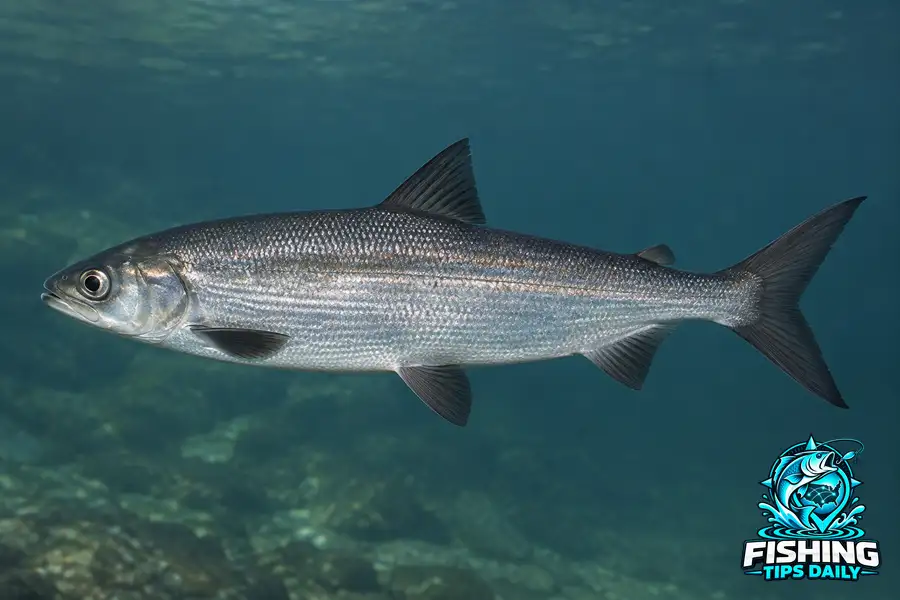
Identification and Status
Dark fins and a relatively deep body distinguish the traditional Blackfin Cisco form. Identification within the cisco group can require expert examination. Historical Great Lakes populations disappeared from several waters, while northern inland records have prompted continuing taxonomic study. A blanket claim that every population is extinct would oversimplify that evidence.
Size and Weight
An Ontario species account reports maxima of 55 cm total length and 1.11 kg, approximately 21.7 inches and 2.45 pounds. These are separate published maximum values. Adults commonly fall below those limits, and historical average measurements should not be substituted for maximum size.
Habitat and Natural Food
Cold lake depths provide the setting for this fish. Historical Great Lakes records often came from well below 180 feet, although shallower use is documented elsewhere. Opossum shrimp were a particularly important food, connecting deep-water ciscoes to the lake’s small crustacean community.
Historical Fisheries and Water Records
Fishing pressure, invasive species and other ecological changes contributed to historical declines. The profile is not a recommendation to target uncertain remnant populations. A listed water may represent an older occurrence; current presence requires recent evidence and a secure identification.
A Fish With an Unfinished History
The loss of a familiar Great Lakes form does not settle the identity of every similar fish in northern lakes. Distinguishing historical records from modern identifications is essential to understanding Blackfin Cisco.
All Lakes With Blackfin Cisco
Browse all lakes and reservoirs with confirmed Blackfin Cisco records in our database, listed alphabetically.
No published lakes are currently linked to this species in our confirmed records.