
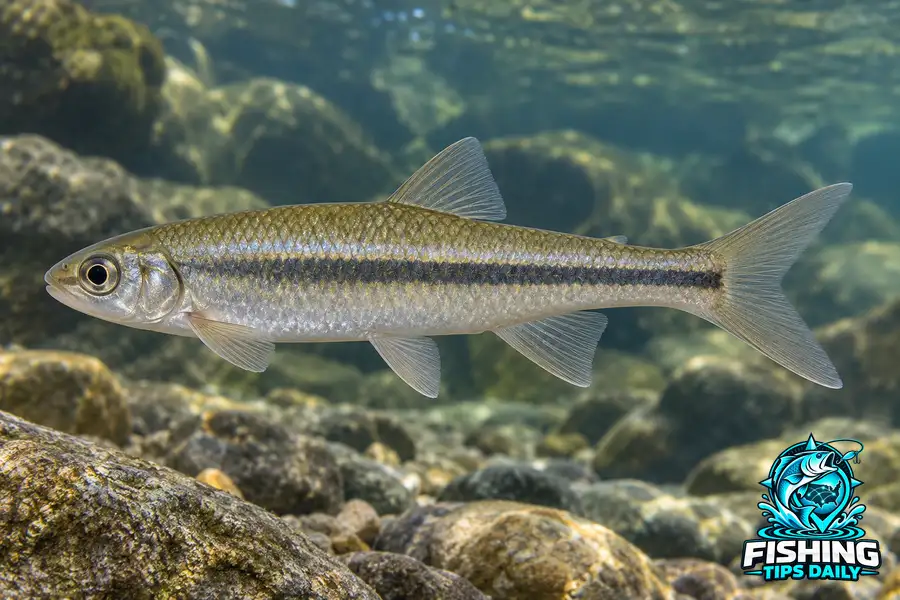
Identity and Range
The species was described as Notropis rupestris in 1987. Its range includes the lower Caney Fork system and nearby tributaries of the middle Cumberland drainage. A small minnow found elsewhere should not be assigned this name solely because it was swimming over rock.
Size and Weight
The reported maximum total length is 7 cm, approximately 2.8 inches with the tail fin included. A verified maximum weight was not found. Modeled length–weight relationships describe estimates and do not establish the heaviest fish actually recorded.
Habitat and Natural Food
Bedrock pools in headwaters, creeks and small rivers are its characteristic habitat, often with plants emerging along the edge. Adults eat midge larvae, water mites, small mayflies and small crustaceans such as copepods and cladocerans. The pool margins therefore provide both living space and feeding opportunities.
Fishing Context
This is a small native stream fish rather than a conventional sport species. Its documented natural diet supports an ecological description, not a claim that a particular artificial lure is effective. Observe fish and shoreline plants without disturbing the shallow pool margins where they live.
A Name Written in Stone
Both “Bedrock Shiner” and the scientific name rupestris refer to its association with rock. Its habitat is a pool setting, so the presence of a rocky bottom should not be confused with a requirement for a fast riffle.
All Lakes With Bedrock Shiner
Browse lakes and reservoirs with documented Bedrock Shiner records, listed alphabetically. Records do not establish current abundance or public access. Check the evidence and managing authority for the water you choose.
No published lakes are currently linked to this species in our confirmed records.