
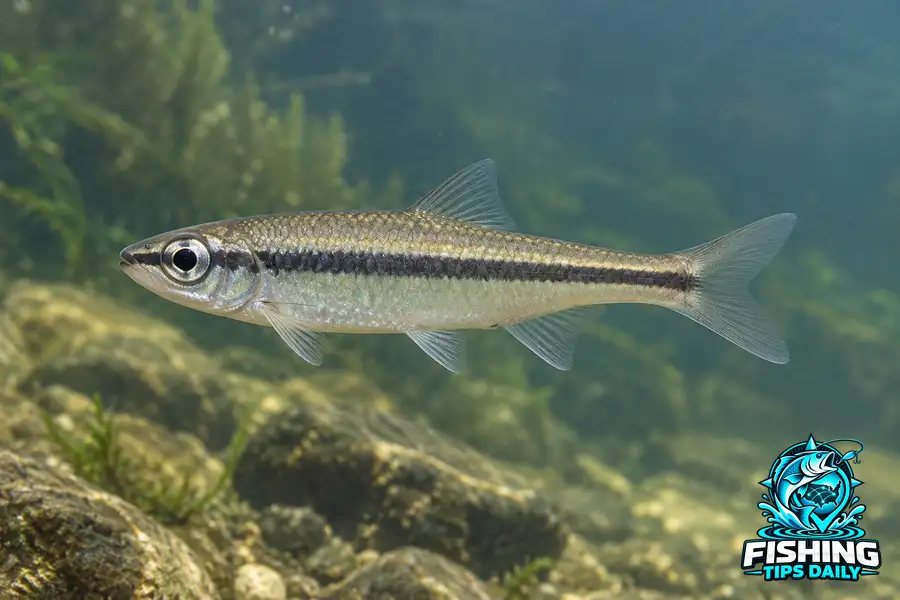
Identity and Size
Bigeye Shiner appears in recent references as Miniellus boops as well as Notropis boops. It is distinct from Bigeye Chub. The reported maximum is 9 cm total length, about 3.5 inches; a common-length summary is 4.8 cm. No reliable maximum weight was established.
Habitat
Flowing pools in generally clear, rocky creeks and small to medium rivers provide typical habitat. Fish are often associated with emergent vegetation near the stream margin. That setting places them where both aquatic prey and insects entering from land may be available.
Natural Food
Surface insects are documented foods. An experimental-stream study also found aquatic midge larvae, algae and detritus in the diet. When researchers reduced incoming terrestrial invertebrates, the fish consumed less terrestrial prey and more detritus. This demonstrates dietary flexibility under the study conditions.
Fishing and Species Movement
This small shiner is more relevant to native-fish identification than to a conventional lure guide. Records outside parts of its native range have been linked to probable bait-bucket introductions. Keeping baitfish in their source waters prevents a familiar small fish from becoming an introduction elsewhere.
Food From Both Sides of the Bank
The stream receives food from its own aquatic community and from the surrounding land. Bigeye Shiner feeding experiments show how a fish can respond when one of those supplies changes, highlighting the connection between stream and bank.
All Lakes With Bigeye Shiner
Browse lakes and reservoirs with documented Bigeye Shiner records, listed alphabetically. Records do not establish current abundance or public access. Check the evidence and managing authority for the water you choose.
No published lakes are currently linked to this species in our confirmed records.