
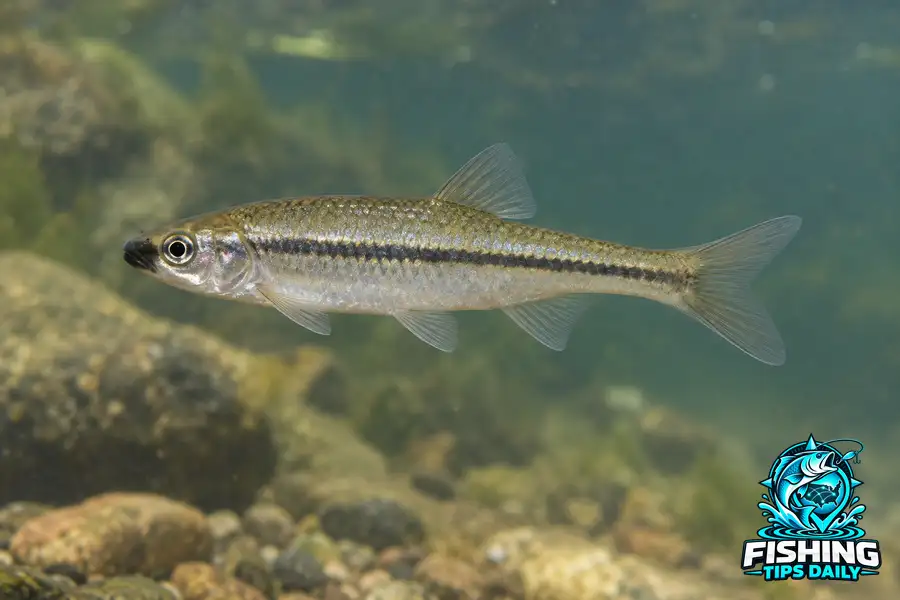
Identification
A dark stripe follows each side through the eye and onto the snout. The gray upper body contrasts with a silvery underside, while the abdominal lining is dark. Recent classifications place this species in Miniellus; older records use Notropis.
Size and Weight
The reported upper length is only 3.8 cm, about 1.5 inches. Even a fully grown individual remains minnow-sized. No dependable maximum individual weight was established; a combined weight for several specimens would not answer that question.
Habitat and Natural Food
Quiet backwaters off the main channel provide its characteristic setting. Algae and tiny drifting organisms, including rotifers and small crustaceans, form the documented diet. Shoreline vegetation and the persistence of these sheltered waters influence the habitat available to such a small fish.
Reproduction and Conservation
Breeding is associated with warmer months, but the precise spawning behavior remains incompletely documented. Accounts proposing bottom spawning should not be read as direct observations. Its restricted southeastern range and vulnerable backwater habitats make protection of water quality and natural connections especially relevant. No recreational bait recommendation is established.
Small Enough to Overlook
Its large eyes and upturned mouth are prominent on a remarkably tiny body. Identifying this shiner requires looking closely at the head and side stripe, rather than assuming every small school consists of juvenile larger fish.
All Lakes With Blackmouth Shiner
Browse lakes and reservoirs with documented Blackmouth Shiner records, listed alphabetically. Records do not establish current abundance or public access. Check the evidence and managing authority for the water you choose.
No published lakes are currently linked to this species in our confirmed records.