
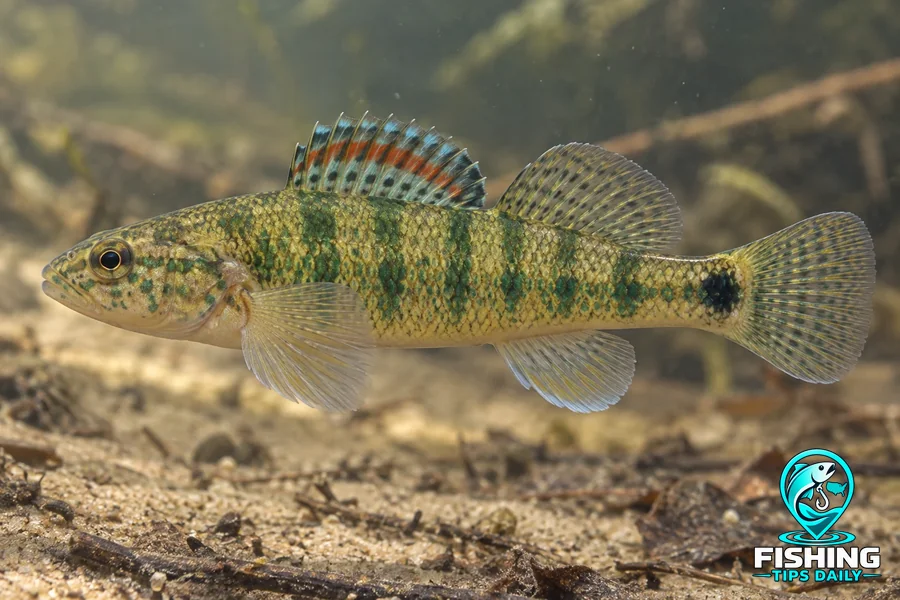
Identification
The small head and mouth accompany an olive or yellowish body. Males can show green bars, while females have smaller green markings. A dark mark near the tail base and the patterned dorsal fin provide additional clues. Closely related Slough Darter requires more detailed examination to separate.
Size and Weight
A species summary reports 4.4 cm total length, approximately 1.7 inches. An Alabama adult-size range extends to about 1.8 inches. These close figures describe a very small fish; neither supports a dependable maximum weight, which remains unverified.
Habitat and Natural Food
Slow pools and stream margins over sand or mud provide habitat. Unlike a typical riffle specialist, this darter can occur in turbid water with little flow. Small aquatic invertebrates, including midge larvae and copepods, supply food.
Reproduction
Eggs are placed individually on submerged twigs and roots. Regional accounts describe spawning across spring into early summer. The small-scale habitat used for eggs is easy to overlook when viewing the stream from above.
A Darter of the Backwaters
The common name reflects a real habitat difference. Slow water and soft sediment can support this fish even where the channel lacks the obvious rocky riffles associated with many darters. Protecting a variety of stream habitats therefore matters.
All Lakes With Backwater Darter
Browse lakes and reservoirs with documented Backwater Darter records, listed alphabetically. Records do not establish current abundance or public access. Check the evidence and managing authority for the water you choose.
No published lakes are currently linked to this species in our confirmed records.