
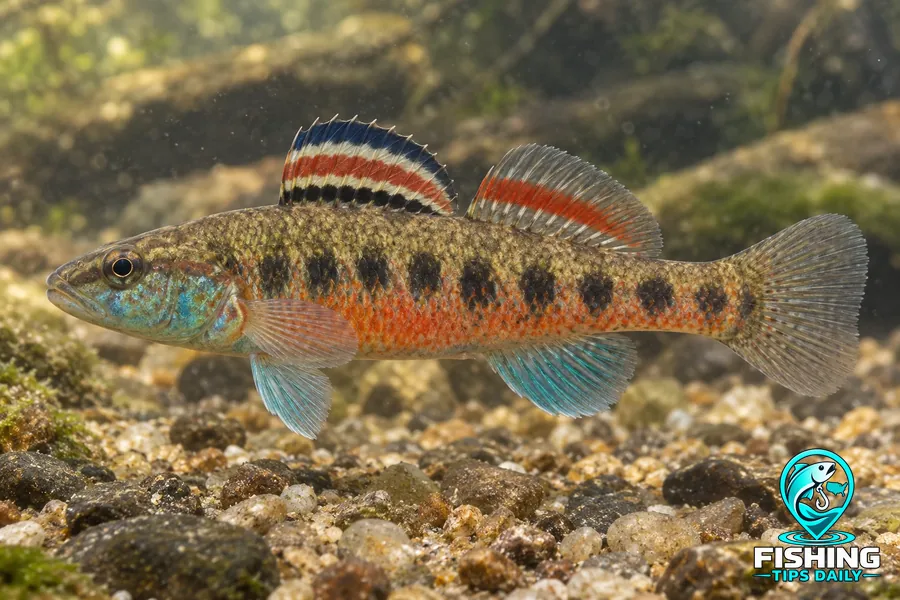
Identification
An olive or tan back sits above a pale underside in ordinary coloration. Dark blotches mark the sides. Breeding males develop orange tones along the lower body and blue-green areas on the head and fins. It is a different fish from Banded Darter.
Size and Weight
The reported maximum total length is 7.1 cm, about 2.8 inches. Regional adult descriptions often fall below that size. No dependable maximum weight was established, and a genus-based weight estimate would not be a measured record.
Habitat and Natural Food
Pools over sand and gravel provide habitat in headwaters, creeks and small rivers. Midge larvae are documented foods, alongside other small aquatic prey. The presence of a pool does not mean the fish requires completely stagnant water.
Seasonal Appearance
Breeding coloration can change the impression a fish gives in a photograph. A bright male and a subdued individual may belong to the same species. Fin and body structure remain useful alongside color when checking identity.
A Bright Male in a Small Stream
During breeding condition, the male’s lower body and fins become conspicuous. This seasonal change adds an identification clue, but it should not be expected in females or every fish seen outside the breeding period.
All Lakes With Bandfin Darter
Browse lakes and reservoirs with documented Bandfin Darter records, listed alphabetically. Records do not establish current abundance or public access. Check the evidence and managing authority for the water you choose.
No published lakes are currently linked to this species in our confirmed records.