
Identification
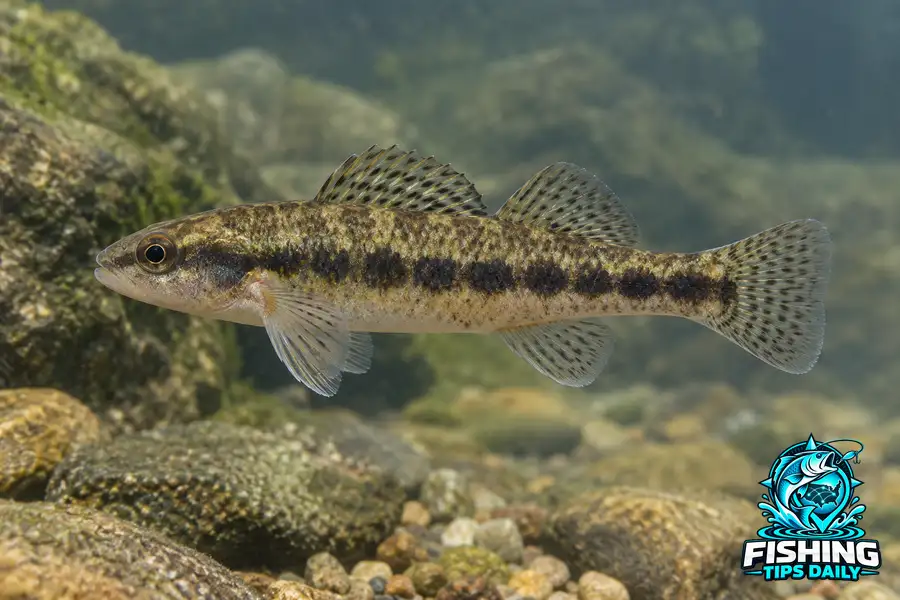
Fused dark side blotches create an uneven stripe, and a dorsal saddle often joins an enlarged blotch on the side. Breeding colors can include turquoise on parts of the head and fin margins. Lip structure and snout shape help specialists separate it from similar snubnose darters.
Size and Weight
A maximum total length of 7.2 cm is about 2.8 inches. Regional adult descriptions commonly fall between 4 and 6 cm. A dependable measured maximum weight was not found, so no guessed body mass is assigned.
Habitat and Natural Food
Clear streams with pools and riffles over gravel, broken rock or slabs form its documented habitat. The immature stages of several aquatic insects supply food, including midges, mayflies, caddisflies and blackflies. These prey occupy the same stream environment used by the fish.
Spawning and Observation
During spring spawning, a female places individual eggs in small depressions on rocks, logs or other hard surfaces, with a male fertilizing them nearby. This precise egg-placement behavior makes a stronger natural-history detail than an unsupported recreational bait recommendation.
One Egg at a Time
Instead of describing this darter simply as an egg layer, its observed behavior gives a clearer picture: females select small recesses on hard surfaces and deposit eggs individually during spawning.
All Lakes With Blackside Snubnose Darter
Browse lakes and reservoirs with documented Blackside Snubnose Darter records, listed alphabetically. Records do not establish current abundance or public access. Check the evidence and managing authority for the water you choose.
No published lakes are currently linked to this species in our confirmed records.