
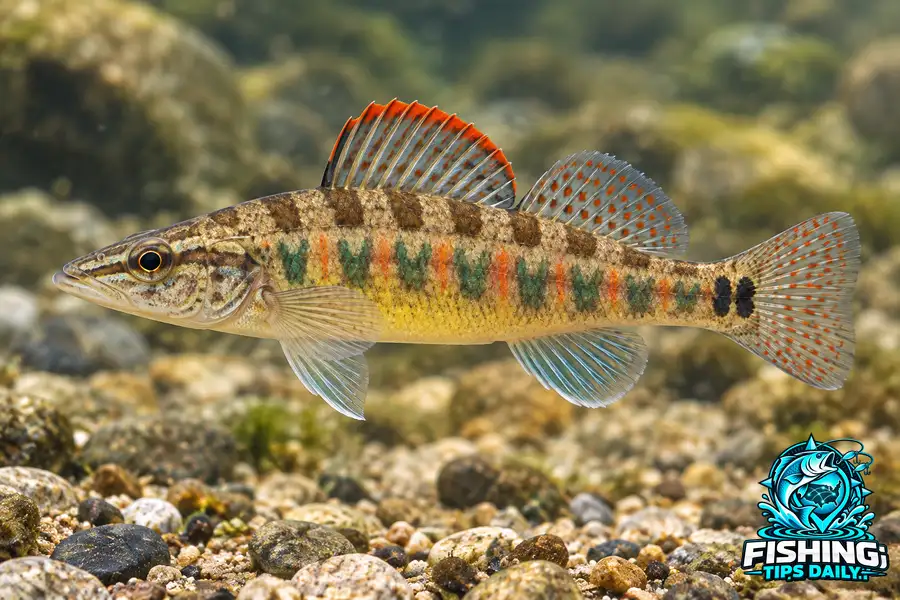
Identification and Naming
The scientific name matters when interpreting older arrow darter records. Kentucky Arrow Darter is recognized separately as Etheostoma spilotum. Its conservation status and observations should not automatically be transferred to Etheostoma sagitta.
Size and Weight
The reported maximum total length is 12 cm, about 4.7 inches. This measurement includes the tail fin. No dependable species-wide maximum weight was verified, so weights from other darters are not inserted.
Habitat and Natural Food
Rocky pools and riffles occur in occupied headwaters, creeks and small rivers. Mayfly nymphs are documented food, along with blackfly and midge larvae and smaller contributions from other aquatic insects.
Observation and Habitat Care
A stream’s small size does not make its habitat unimportant. Pools and rocky runs can support different needs within the same reach. No best bait or lure is established here; this is primarily a natural-history and identification profile.
A Meal Among the Stones
Mayfly nymphs and other insect larvae connect the fish’s diet with the streambed. The rocky habitat supports both the darter and the small animals it eats. That relationship makes the condition of a stream’s bottom relevant to more than shelter alone.
All Lakes With Arrow Darter
Browse lakes and reservoirs with documented Arrow Darter records, listed alphabetically. Records do not establish current abundance or public access. Check the evidence and managing authority for the water you choose.
No published lakes are currently linked to this species in our confirmed records.