
Soft Plastic Fishing
Soft plastics are flexible bodies whose rig determines much of their behavior. A worm can fall horizontally, stand near bottom, swim, or slide through cover depending on hook placement and weight.
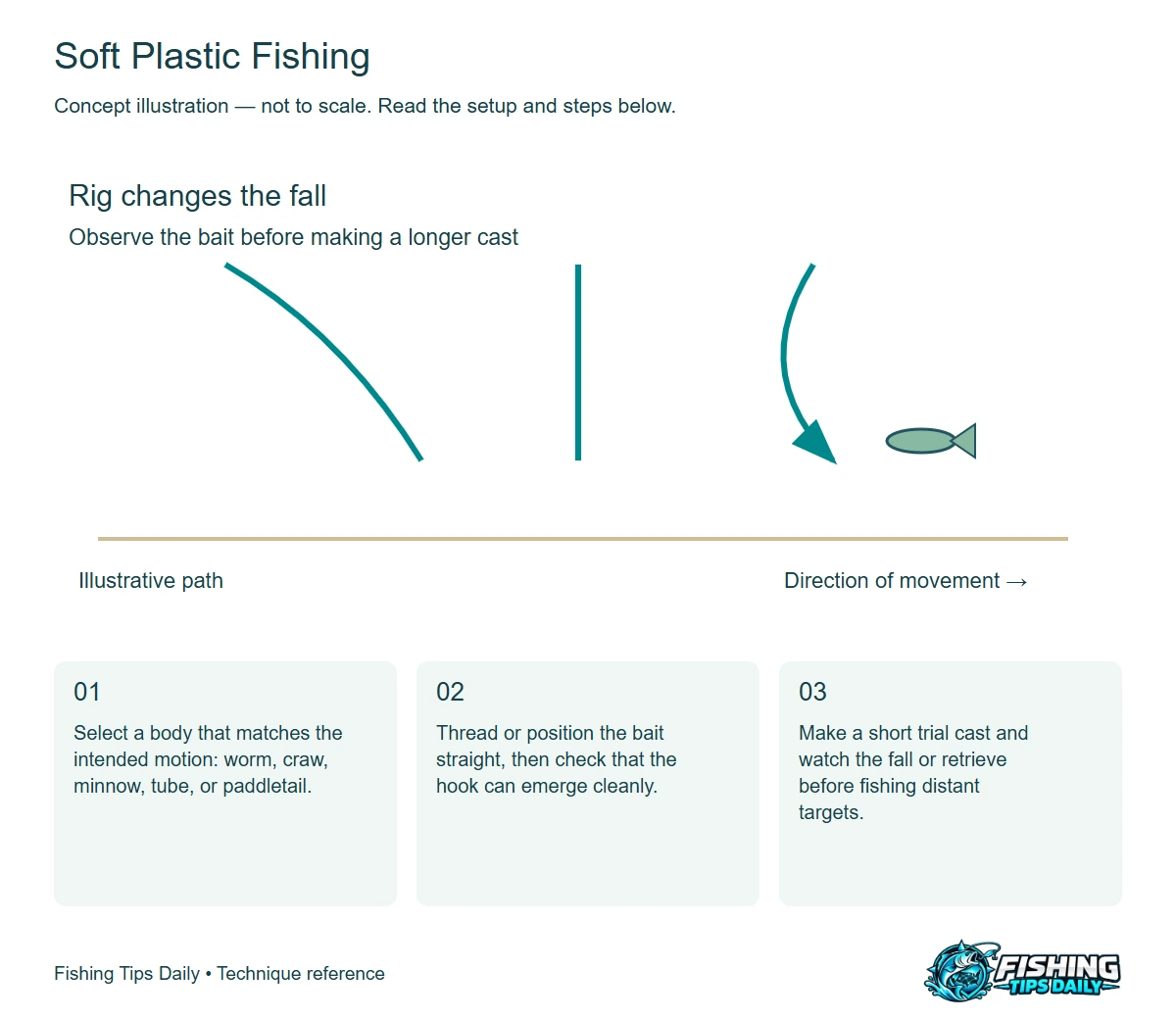
Build a setup that does the job.
Match hook gap to body thickness and leave room for the plastic to compress. Choose only enough weight for control. Keep incompatible plastic materials separate according to their storage instructions.
Make the first test close enough to observe. Check the connection, the hook opening, and whether the offering follows the intended path. Correct a fouled or poorly balanced setup before adding distance.
How to fish it, step by step.
- Select a body that matches the intended motion: worm, craw, minnow, tube, or paddletail.
- Choose a rig that reaches the zone and keeps the hook suitable for the cover.
- Thread or position the bait straight, then check that the hook can emerge cleanly.
- Make a short trial cast and watch the fall or retrieve before fishing distant targets.
- Replace torn sections or rerig when the body slides, bunches, or spins.
A useful first test.
A straight worm on a protected Texas rig can work beside wood. Move to a center-hooked wacky presentation in a clean opening when a slower, horizontal fall is the useful difference.
Keep the productive detail repeatable: position, depth, speed, or pause. Change one of those at a time so you can tell what improved the presentation.
Variations—and what changes.
Texas, Carolina, wacky, Neko, Ned, drop-shot, shaky-head, and free rigs each receive their own setup guide in the rig family. This page explains how to choose among them.
Read the symptom before changing everything.
Plastic bunches on the bend
Check hook size and where the point exits; leave space for compression.
Tail barely moves
Reduce body stiffness or head interference before assuming more speed is necessary.
Know when to change methods.
If the offering cannot reach the target, repeatedly snags, or demands equipment you cannot control comfortably, choose another presentation from this family. Keep the location clue you learned; changing a rig does not require starting the whole search over.
Use tackle and bait permitted on the water, and plan safe access and fish handling. The illustrations explain concepts; they do not replace equipment instructions or current local rules.