
Texas Rig Fishing
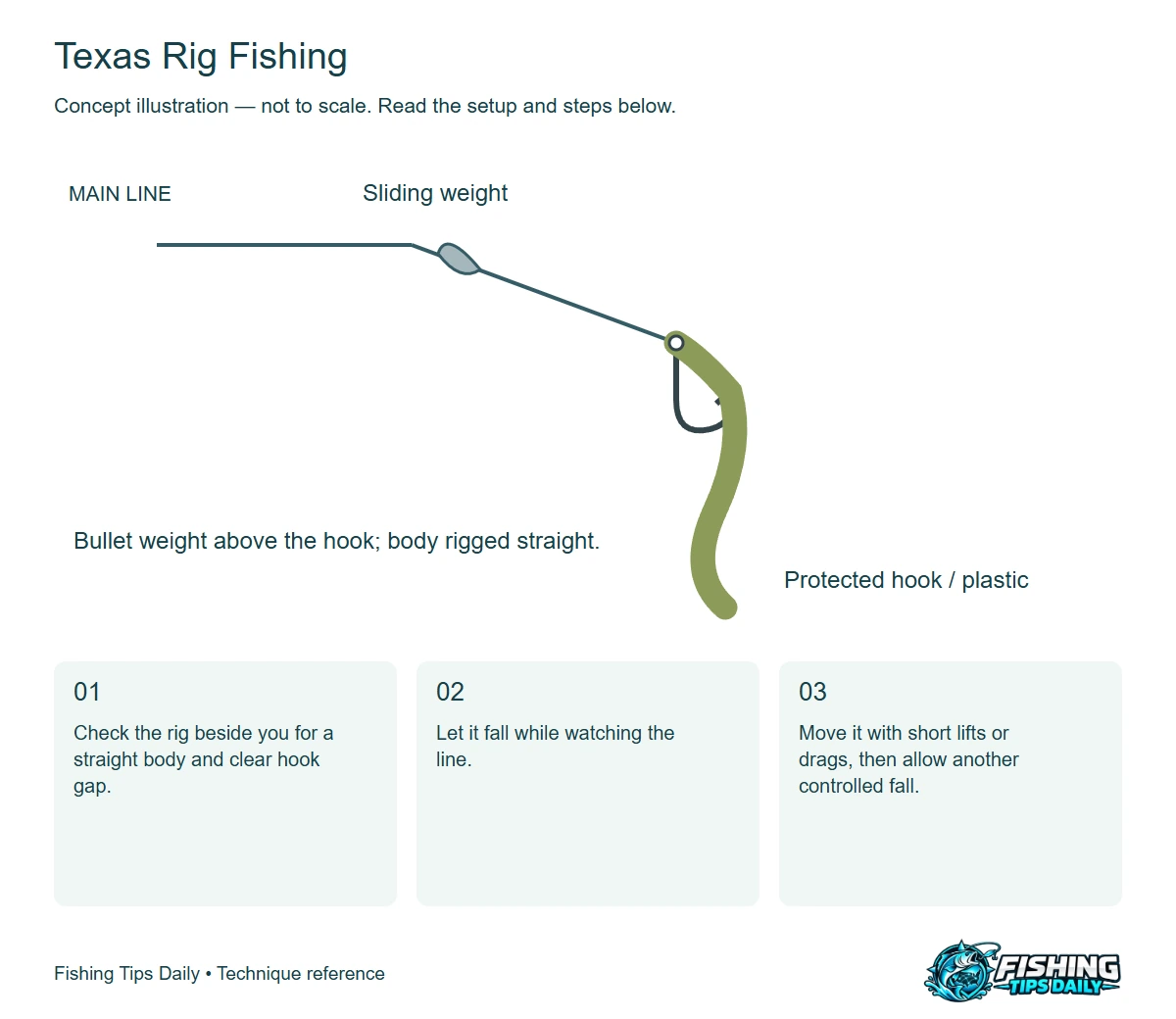
A Texas rig places a soft plastic on an offset or suitable straight-shank hook with the point protected by the body. A sliding bullet weight commonly supplies depth control. Straight rigging is essential to a clean fall.
Build a setup that does the job.
Slide the bullet weight onto the line nose-first toward the rod, then tie the hook. Thread the bait through the nose, move it onto the keeper, and reinsert the point so the body lies straight with room to compress.
Make the first test close enough to observe. Check the connection, the hook opening, and whether the offering follows the intended path. Correct a fouled or poorly balanced setup before adding distance.
How to fish it, step by step.
- Check the rig beside you for a straight body and clear hook gap.
- Cast or pitch past the target.
- Let it fall while watching the line.
- Move it with short lifts or drags, then allow another controlled fall.
- When the line moves or loads, reel into contact and set with enough pressure for the protected single hook.
A useful first test.
Beside a laydown, work the outer branch first. If bites come as the bait falls, repeat that entry rather than dragging every cast through the entire tree.
Keep the productive detail repeatable: position, depth, speed, or pause. Change one of those at a time so you can tell what improved the presentation.
Variations—and what changes.
Weightless Texas rigging suits slower shallow falls. Pegging can keep weight and bait together in cover but removes some sliding freedom. Punching is a separate heavy-cover application.
Read the symptom before changing everything.
Bait curves
Reposition the hook exit to straighten it.
Missed hookups
Check point exposure, compressed plastic in the gap, and insufficient line control.
Know when to change methods.
If the offering cannot reach the target, repeatedly snags, or demands equipment you cannot control comfortably, choose another presentation from this family. Keep the location clue you learned; changing a rig does not require starting the whole search over.
Use tackle and bait permitted on the water, and plan safe access and fish handling. The illustrations explain concepts; they do not replace equipment instructions or current local rules.