
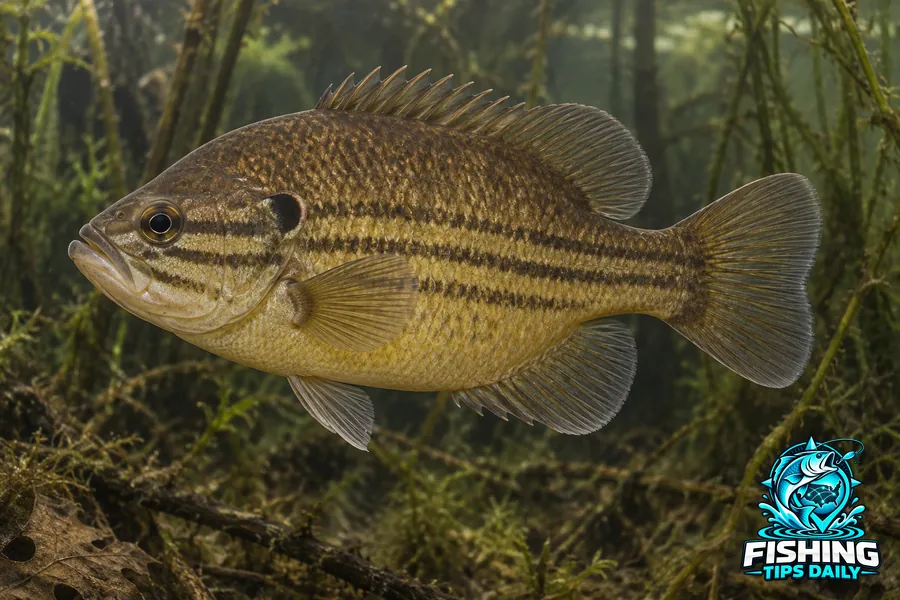
Coastal-Plain Distribution
The range extends through Atlantic coastal-plain and lower Piedmont drainages and selected northern Florida and southern Georgia Gulf systems. These are multiple watersheds. A precise drainage helps distinguish the account from a claim that all southeastern wetlands contain the species.
Vegetation and Detritus
Adults typically occur over mud and accumulated organic material in sloughs, lakes, pools and backwaters. Plant cover is part of this sheltered setting. A stream record may therefore concern a quiet side area rather than the principal flowing channel.
Size and Identification
The maximum reference is 21 centimeters total length, with a common value of 14.1 centimeters. The scientific name is Acantharchus pomotis. It should remain distinct from other sunfishes with similar rounded outlines, so retain head features, fins, body pattern and locality when comparing photographs.
Keep the Quiet-Water Patch
A backwater can differ substantially from the adjoining river. Preserve the vegetation and bottom material of the actual occupied habitat.
All Lakes With Mud Sunfish
Browse lakes and reservoirs with documented Mud Sunfish records, listed alphabetically. Records do not establish current abundance or public access. Check the evidence and managing authority for the water you choose.
No published lakes are currently linked to this species in our confirmed records.