
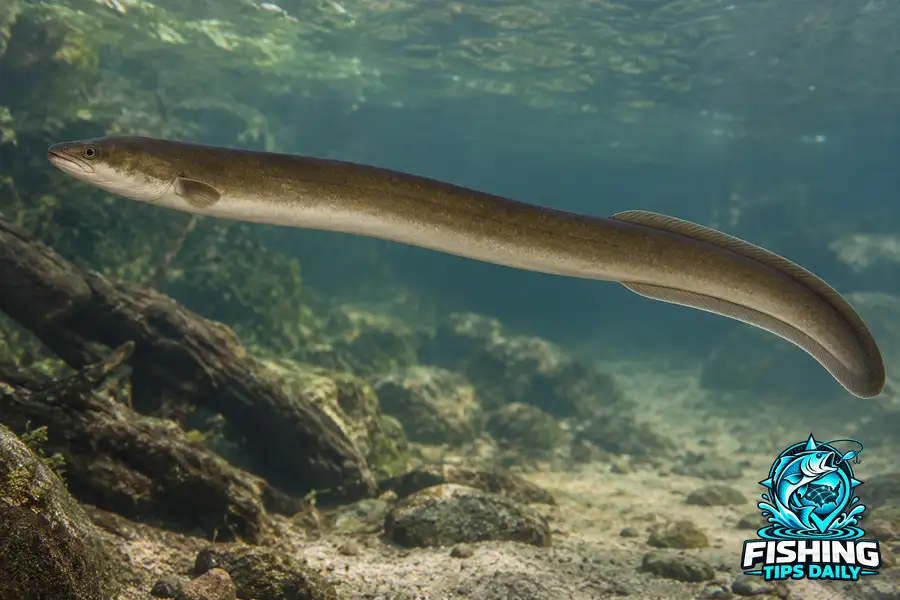
Indo-Pacific Identity
The scientific name is Anguilla bicolor. Similar eels can be difficult to separate, and vertebral counts are important in some comparisons. The tropical Indian and western Pacific range should not be replaced with the migration route of a different eel species.
Freshwater Growth
Adults use lowland streams and pools, including marshy settings and deeper rocky sections. Large rivers are less characteristic. The coastal position of a stream matters because the life cycle includes movement between fresh water and the sea.
Migration and Size
Mature adults descend toward marine spawning habitat, while young eventually enter coastal rivers. Small fish, crustaceans and mollusks are recorded prey. The compiled maximum is 123 centimeters total length. Proposed current-driven larval routes should remain separate from a directly observed migration of an individual.
Keep the Coastal Link
An eel in fresh water can be part of an ocean-connected life cycle. Record the stream’s connection to the estuary and sea.
All Lakes With Level-finned Eel
Browse lakes and reservoirs with documented Level-finned Eel records, listed alphabetically. Records do not establish current abundance or public access. Check the evidence and managing authority for the water you choose.
No published lakes are currently linked to this species in our confirmed records.