
Identification
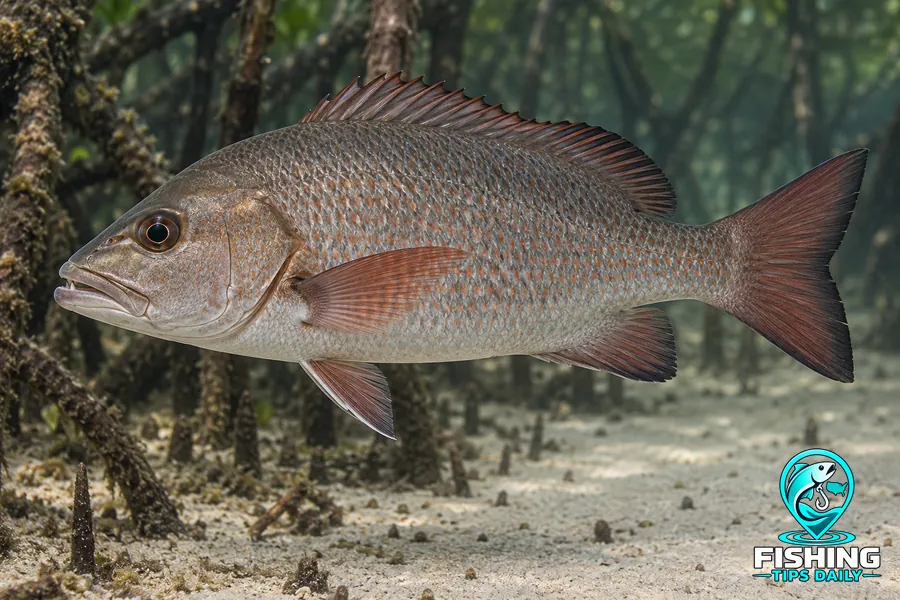
The snout is pointed, and the head profile is slightly concave. Young fish often show a dark stripe through the eye and a blue cheek stripe. These juvenile markings should be interpreted alongside fin and head structure rather than expected on every adult.
Changing Habitat
Adults occur in both coastal and offshore water, including reefs and rocky areas. Young use estuaries, mangroves and lower rivers. Freshwater occurrence does not make the whole species an inland freshwater fish; its habitat remains strongly connected to the coast.
Feeding and Range
Feeding is concentrated at night in reported accounts and includes small fishes, shrimp, crabs and mollusks. The western Atlantic range includes the Gulf and Caribbean. Historical Brazilian records involve misidentifications, so they are not retained as confirmed range extensions here.
Keep Juvenile Habitat in Context
A young snapper in a river can belong to a coastal species. Life stage and salinity help explain the record.
All Lakes With Gray Snapper
Browse all lakes and reservoirs with confirmed Gray Snapper records in our database, listed alphabetically.
Showing 1–3 of 3 lakes · Page 1 of 1
- Caillou Lake Terrebonne, LA
- Lake Pontchartrain St. Tammany, LA
- Lake Saint Catherine Orleans, LA