
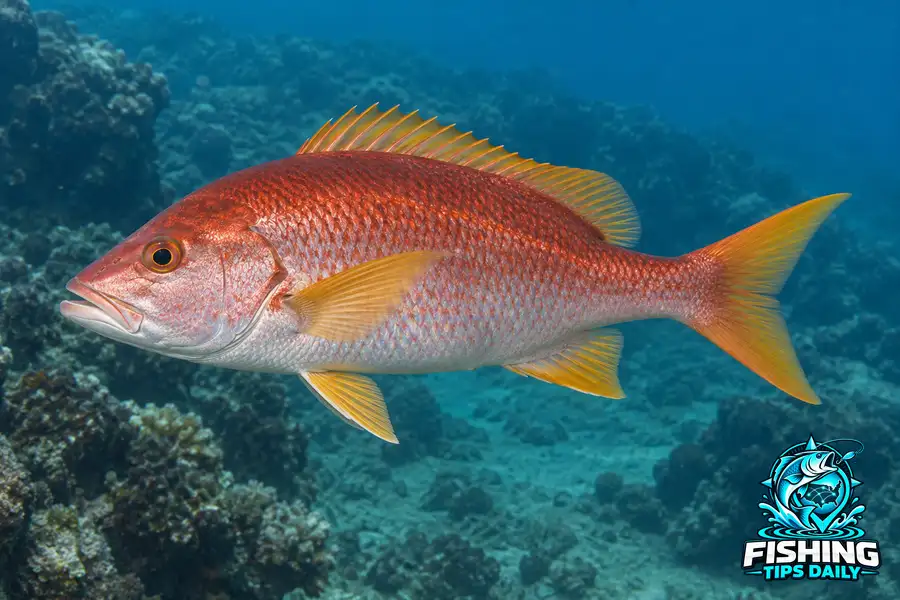
Identification
The body and fins are mainly red, sometimes with a blue streak below the eye. Young fish show bars that are less characteristic of larger adults. A reddish snapper still needs comparison with neighboring species because red coloration alone is widely shared.
Adults and Juveniles
Adults generally occupy inshore reef areas over hard bottom and are often solitary. Juveniles can occur in shallow coastal water and estuaries. Those different settings mean a small estuarine fish and a large reef fish can represent different stages of the same species.
Food and Size
Colorado Snapper eats fishes and invertebrates. The published maximum length includes the tail, and the weight is a separate reference value. Its hard-bottom association is useful context when interpreting a catch, but local identification remains necessary before assigning a red snapper to this species.
An Eastern Pacific Snapper
The Colorado name should not place this fish in an inland river. Its documented habitat is coastal marine water, with estuarine use by juveniles.
All Lakes With Colorado Snapper
Browse all lakes and reservoirs with confirmed Colorado Snapper records in our database, listed alphabetically.
No published lakes are currently linked to this species in our confirmed records.