
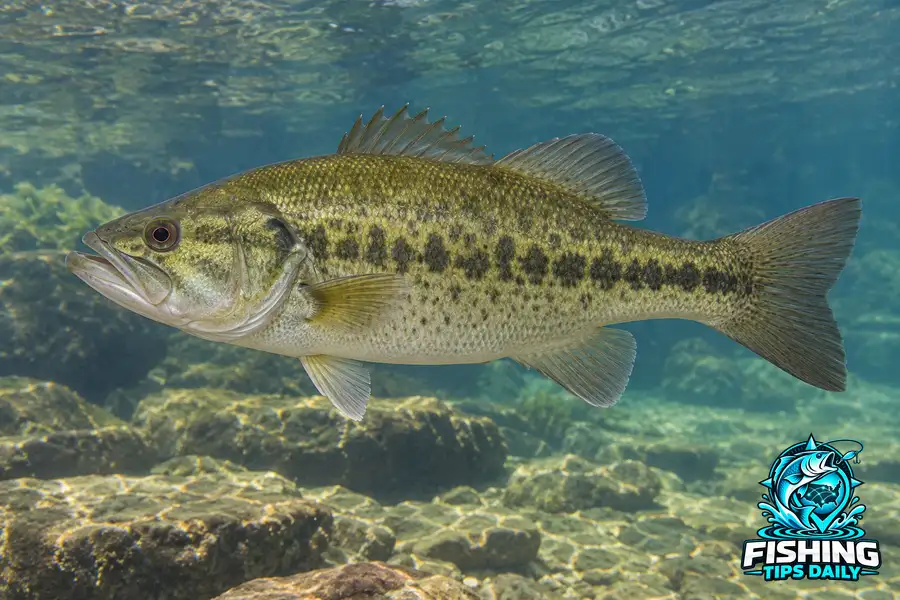
Identification
The fin rays are greenish or yellow-green rather than strongly red or orange. Dark side blotches tend to be more bar-shaped forward on the body and rounder toward the rear. Reliable identification combines those features with the drainage where the fish was found.
Size and Weight
The published 36-centimeter figure is standard length. A whole-fish measurement including the tail would be longer, so do not compare it directly with total-length records. The 800-gram mass is a reported species maximum, not a current certified angling record.
Range and Recognition
Cahaba Bass was formally described as a separate species in 2013. Older references may include it within a broader redeye bass concept. Keep the capture location with photographs so that older names do not conceal a different species.
The Tail Changes the Comparison
Standard length stops where the tail fin begins. That detail is especially important for Cahaba Bass because its published maximum uses this shorter measuring convention.
All Lakes With Cahaba Bass
Browse lakes and reservoirs with documented Cahaba Bass records, listed alphabetically. Records do not establish current abundance or public access. Check the evidence and managing authority for the water you choose.
No published lakes are currently linked to this species in our confirmed records.