
Identification
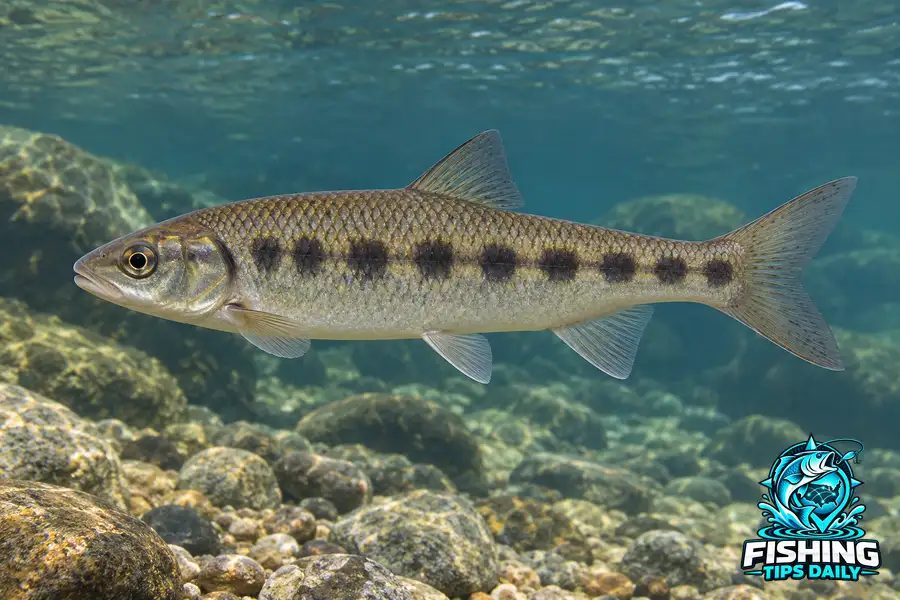
Large eyes sit high on the head, and the blunt nose overhangs the mouth. One barbel occurs at each mouth corner. The series of rectangular side blotches is particularly distinctive; Bigeye Chub has a different side pattern despite also having large eyes and barbels.
Size and Weight
The reported maximum total length is 10 cm, or about 3.9 inches. A reproductive study measured adults up to 8 cm in standard length, which excludes the tail fin. That study weighed preserved specimens for reproductive analyses; it does not supply a suitable maximum live body weight for this profile.
Habitat and Natural Food
Coarse gravel, cobble and other rocky substrates in upland riffles and runs provide habitat. Attached growth known as periphyton and aquatic insect larvae form part of the diet. Excess sediment can degrade the stream conditions this fish uses.
Spawning and Observation
Monthly sampling in Alabama’s Flint River found reproductive activity strongest from March through May, with ripe ovaries recorded in March and April. Timing can differ between populations. The study documents biology rather than a recreational bait preference or a ranking of fishing waters.
More Than a Generic Spotted Minnow
Count and examine the large side markings rather than relying on a vague spotted appearance. Their rectangular shape, together with the blunt snout and paired mouth-corner barbels, provides a more useful identification combination.
All Lakes With Blotched Chub
Browse lakes and reservoirs with documented Blotched Chub records, listed alphabetically. Records do not establish current abundance or public access. Check the evidence and managing authority for the water you choose.
No published lakes are currently linked to this species in our confirmed records.