
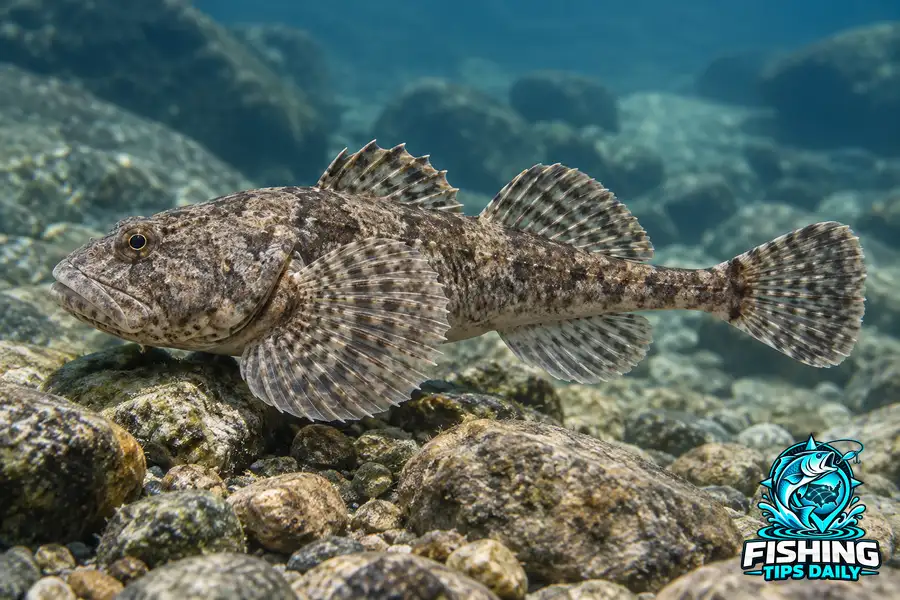
Identity and Ecological Role
This profile covers Cottus extensus, the sculpin native to Bear Lake. Its importance extends beyond its own population: native cutthroat trout and introduced lake trout feed on sculpins. It should not be confused with a small bullhead catfish.
Size and Weight
An aquatic-ecology research account reports observed upper lengths of 173 mm for males and 137 mm for females, about 6.8 and 5.4 inches. These observations exceed the 13 cm total-length maximum in the general species summary. The measurement convention for the larger observations is not specified in that account; no maximum weight is assigned.
Habitat and Natural Food
Invertebrates form its food base. Research on young Bear Lake Sculpins describes changes in depth between day and night, showing that bottom association does not mean they remain motionless in one place. These movements connect feeding opportunities at different depths.
Spawning and Fishing Context
Spawning takes place in cavities among rocks in the shallow lake margin. This is a forage and conservation fish rather than a standard angling target. Keeping shoreline spawning rocks in place helps retain the small spaces on which reproduction depends.
The Fish Behind the Trout
Sculpins are an important link between invertebrates and larger trout. Protecting this food-web connection means considering the smaller native fish and their breeding habitat alongside the game fish that anglers see.
All Lakes With Bear Lake Sculpin
Browse lakes and reservoirs with documented Bear Lake Sculpin records, listed alphabetically. Records do not establish current abundance or public access. Check the evidence and managing authority for the water you choose.
Showing 1–1 of 1 lakes · Page 1 of 1
- Bear Lake Rich, UT