
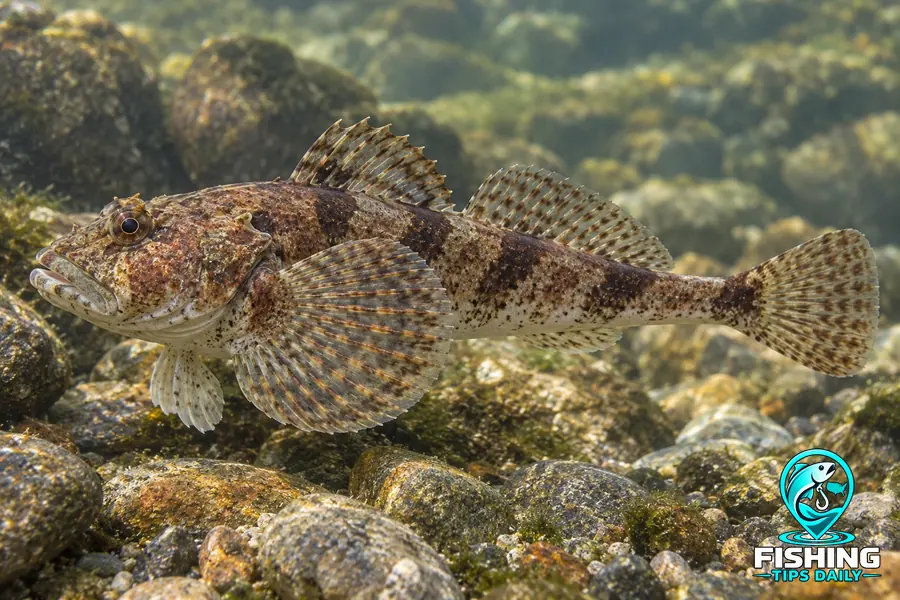
Identification
A broad head narrows into a more slender body. Dark bands and mottling break up the outline, while broad pectoral fins spread near the bottom. Color alone is not enough to distinguish all sculpins, especially in regions with several similar species.
Size and Weight
A published Tennessee cave specimen measured 19.6 cm total length, approximately 7.7 inches, exceeding the widely repeated 18 cm summary maximum. Its standard length was 16.5 cm, excluding the tail. The documented large length is not claimed as a verified worldwide record. A dependable maximum weight was not established.
Habitat and Natural Food
Streambed cover provides places to rest and hunt. Aquatic insects are important foods, and studies also document other small animals. Prey size changes with fish size, so a large individual need not have the same menu as a juvenile.
Life Near the Bottom
The absence of a swim bladder reduces buoyancy. Together with its body form and large fins, this supports a close association with the streambed. A fish resting among stones may remain difficult to notice until it moves.
Built to Stay Down
A Banded Sculpin does not rely on a gas-filled swim bladder to hold position in open water. Its anatomy suits life against the bottom instead. Broad fins and a flattened body complement that low-buoyancy design in moving water.
All Lakes With Banded Sculpin
Browse lakes and reservoirs with documented Banded Sculpin records, listed alphabetically. Records do not establish current abundance or public access. Check the evidence and managing authority for the water you choose.
No published lakes are currently linked to this species in our confirmed records.