
Identification
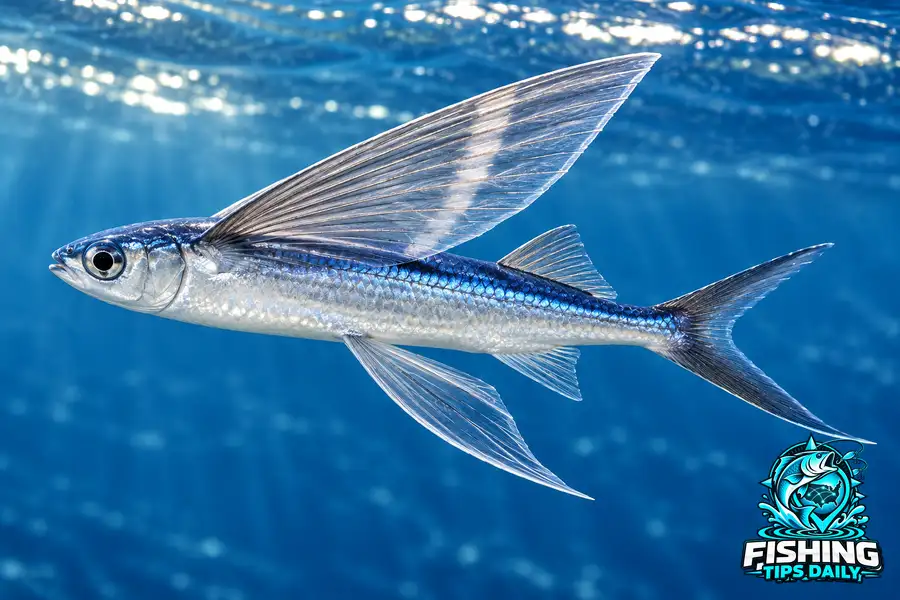
The scientific name Cheilopogon melanurus separates this species from other Atlantic flyingfishes. Enlarged fins are characteristic of the group, but the ability to glide alone cannot identify an individual to species. Fin patterns and a clear side view are useful when comparing similar fish.
Size and Weight
A Caribbean account gives an upper length of 33 cm, about 13 inches. A separate species summary reports 32 cm total length and a common length of 25 cm. The small difference between summaries should not be turned into an exact biological limit. No verified maximum weight was established.
Habitat and Natural Food
Atlantic Flyingfish occurs in marine surface waters and feeds on zooplankton. Its feeding habitat is near the top of the water column, rather than on a lake or estuary bottom. Species accounts place it in shallow surface layers even when the water beneath is deep.
Reproduction and Observation
Researchers have documented mating and spawning off North Carolina. Those observations establish reproductive behavior in that region, but they do not identify one universal spawning date for the entire range. A dependable preferred hook bait was not established.
Leaving the Water Behind
The expanded fins support a glide after the fish leaves the water. This movement is different from the flapping flight of a bird. It is a defining part of the flyingfish body plan and a distinctive way to recognize the group at sea.
All Lakes With Atlantic Flyingfish
Browse lakes and reservoirs with documented Atlantic Flyingfish records, listed alphabetically. Records do not establish current abundance or public access. Check the evidence and managing authority for the water you choose.
No published lakes are currently linked to this species in our confirmed records.