
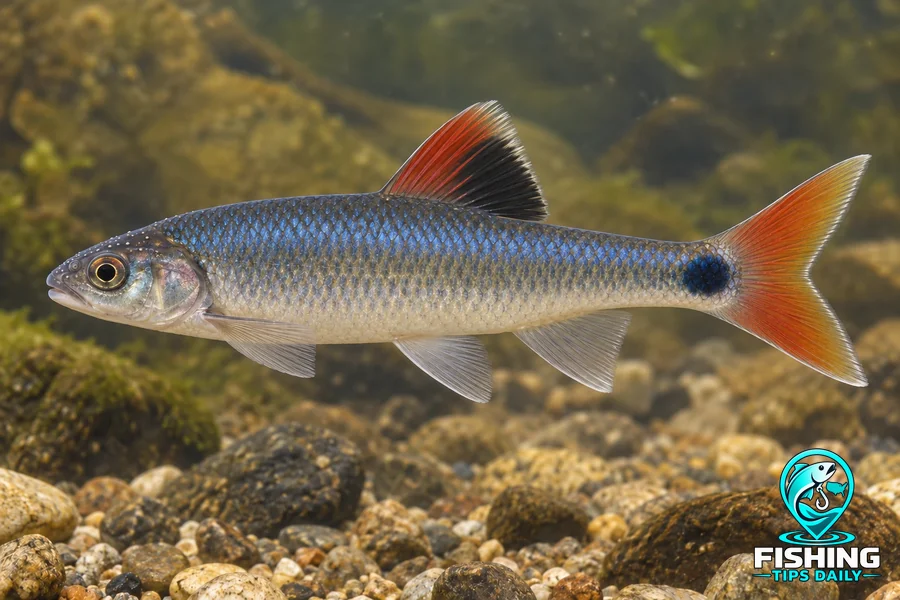
Identification
Breeding males can show a steel-blue body and striking fin colors. The dorsal fin has a red forward area and a dark patch behind it; tail colors include red, yellow and white.
These colors are seasonal and strongest in breeding males. Identification of a plain juvenile should not rely on matching a colorful adult illustration.
Habitat and Natural Food
This shiner is native to the Mobile basin, including the Cahaba, Coosa and Tallapoosa systems. Adults use moderate or swift water over coarse streambeds, while young fish occupy slower shallows.
Food includes aquatic insect larvae, snails and other small animals associated with the bottom.
Size and Weight
The reported adult length is about 2.6–3.5 inches, or 65–90 millimeters. A trustworthy typical-weight value was not established for this profile.
Spawning and Fishing Context
Spawning is reported from April into early July. Crevice spawning has been observed in aquariums; that observation should not be expanded into an unverified description of every wild spawning site.
No tested recreational bait or lure recommendation is available in the research checked here. The profile focuses on recognition and natural history.
Tiny Projections With a Role in Spawning
Breeding Alabama Shiners develop conspicuous tubercles: small, hardened projections on the head and body associated with spawning. They are described as the largest among species in their genus. These seasonal structures add another identification clue beyond the male’s bright colors.
All Lakes With Alabama Shiner
Browse lakes and reservoirs with documented Alabama Shiner records, listed alphabetically. Records do not establish current abundance or public access. Check the evidence and managing authority for the water you choose.
No published lakes are currently linked to this species in our confirmed records.