
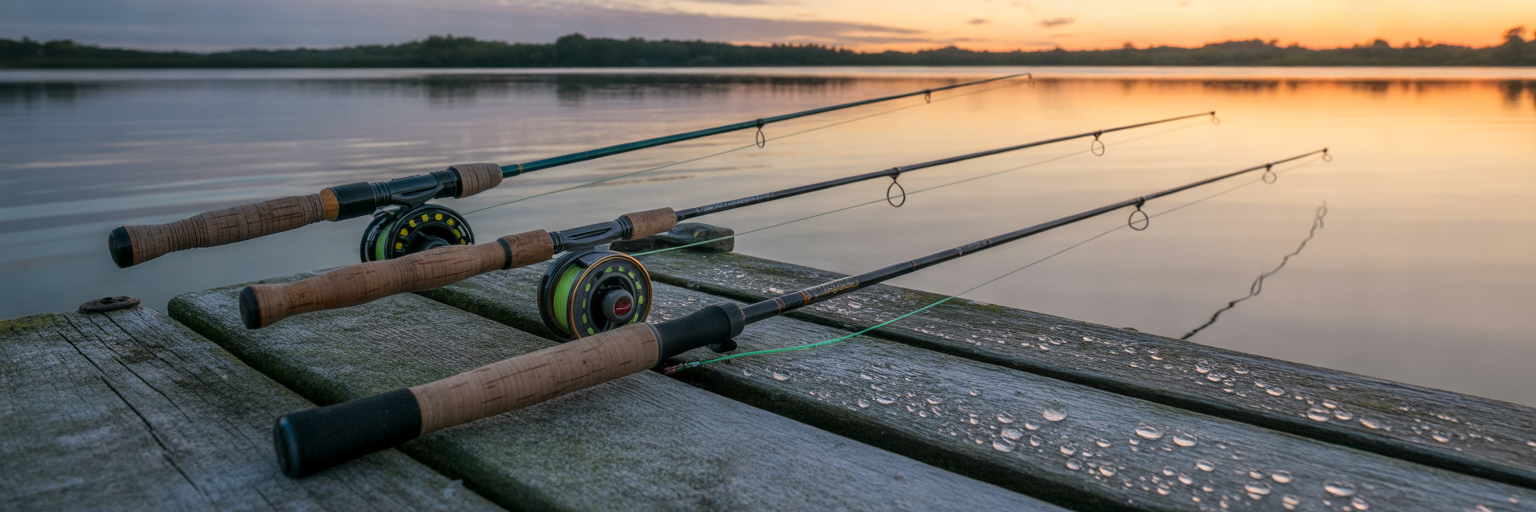
When you are gearing up for a day on the water, it is easy to get caught up in choosing the right lures and line. But one of the most fundamental choices, rod length, often gets overlooked. The truth is, the length of your rod directly impacts every cast you make and every fish you fight. Understanding how to choose rod length for fishing is not about following a rigid rule, but about matching your tool to your environment and technique. It is a decision that affects distance, accuracy, leverage, and even how easily you can get to your favorite spot.
Why You Should Choose Rod Length Carefully
Think of the core trade-off as distance versus accuracy. A longer rod acts like a catapult, creating a wider arc during your cast. This generates more tip speed and sends your lure flying farther. On the other hand, a shorter rod is a precision tool. It gives you the fine control needed to drop a lure exactly where you want it, especially in tight quarters. Neither is better, they just serve different purposes.
Leverage is another key piece of the puzzle. When you need to set the hook on a fish that bites 50 yards out, a longer rod helps you pick up a lot of line quickly, driving the hook home with authority. But once that fish is close to the boat or thrashing in heavy cover, a shorter rod gives you more direct power and control to steer it away from trouble.
Finally, there is the simple matter of portability. A long, one-piece rod is no problem when you can park right next to an open bank. But if you are hiking through dense woods to reach a secluded creek, that same rod becomes a frustrating snag magnet. A shorter, more manageable rod makes the journey much easier, ensuring you arrive ready to fish instead of tangled in branches.
Best Rod Lengths for Bank Fishing
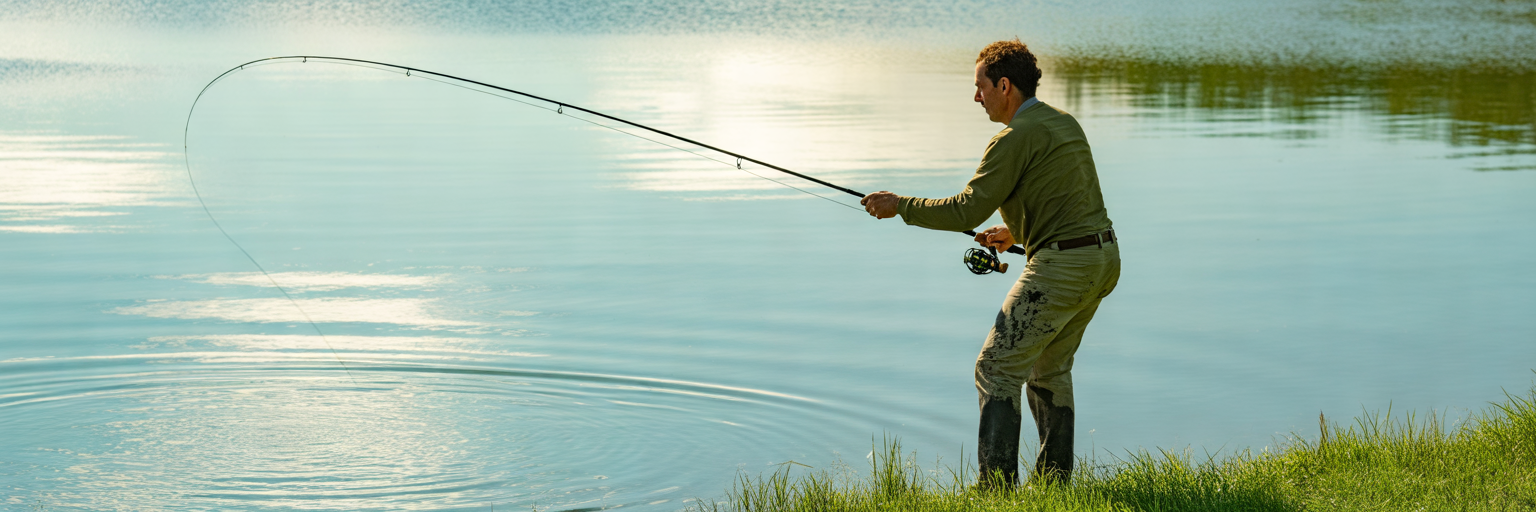
For anglers fishing from the shore, casting distance is often the name of the game. Fish-holding structures like weed lines, drop-offs, and submerged timber can feel just out of reach. This is where a longer rod becomes your best friend. The best rod length for bank fishing is typically in the 7 to 8-foot range, and sometimes even longer. This length gives you the leverage needed to make long casts and cover more water from a stationary position.
But it is not just about distance. A longer rod provides superior line control, which is critical when you are dealing with shoreline obstacles. It helps you keep your line high and above shoreline weeds, rocks, or laydowns that can easily snag your lure and ruin a retrieve. This is especially useful when fishing a bobber, as it allows you to manage a more natural, drag-free drift by keeping excess line off the water.
When you get a bite at the end of a long cast, that extra length also helps you pick up slack quickly for a solid hookset. Of course, there is an exception. If your favorite bank spot is heavily wooded with low-hanging branches, a 7-foot rod offers a great compromise between casting power and maneuverability. When you need to reach those distant bass, having the right presentation is key, and you can find some of our favorite options in this guide to choosing the best shore bass lures.
To sum it up, the advantages of a longer rod from the bank are clear:
- Maximized casting distance to reach offshore targets.
- Improved line management over shoreline obstacles.
- Better leverage for long-distance hooksets.
Picking a Rod for Boat Fishing
Once you step onto a boat, the priorities shift from maximum distance to precision and control. While you can still make long casts, much of boat fishing involves targeting specific pieces of cover at close to medium range. The ideal fishing rod length for boat applications is generally shorter, between 6 and 7 feet. A shorter rod is simply easier to manage in a confined space, preventing you from accidentally hitting your fishing partner, the console, or other gear during a cast or hookset.
This is where a shorter rod’s accuracy truly shines. When you are pitching or flipping lures to precise targets like dock pilings, openings in lily pads, or pockets in submerged grass, a shorter rod offers unmatched pinpoint control. As noted in resources like the rod length guide from FishUSA, guides often prefer shorter rods for this exact reason, as they allow for better close-quarters manipulation of the lure.
A shorter rod also gives you superior leverage when a fish is fighting near the boat. It allows you to apply direct, downward pressure to steer a strong fish away from the trolling motor or anchor line, giving you more control during those critical final moments of the fight. The right tool makes all the difference, and this table breaks down the key considerations.
| Factor | Bank Fishing | Boat Fishing |
|---|---|---|
| Primary Goal | Casting Distance | Accuracy & Control |
| Ideal Length Range | 7’0″ – 8’0″+ | 6’0″ – 7’0″ |
| Key Advantage | Reaching distant structure | Precision casting to targets |
| Main Challenge | Shoreline obstacles (weeds, rocks) | Confined space, risk of tangles |
| Leverage Focus | Picking up slack for long hooksets | Controlling fish near the boat |
Rods for Creeks and Brushy Streams
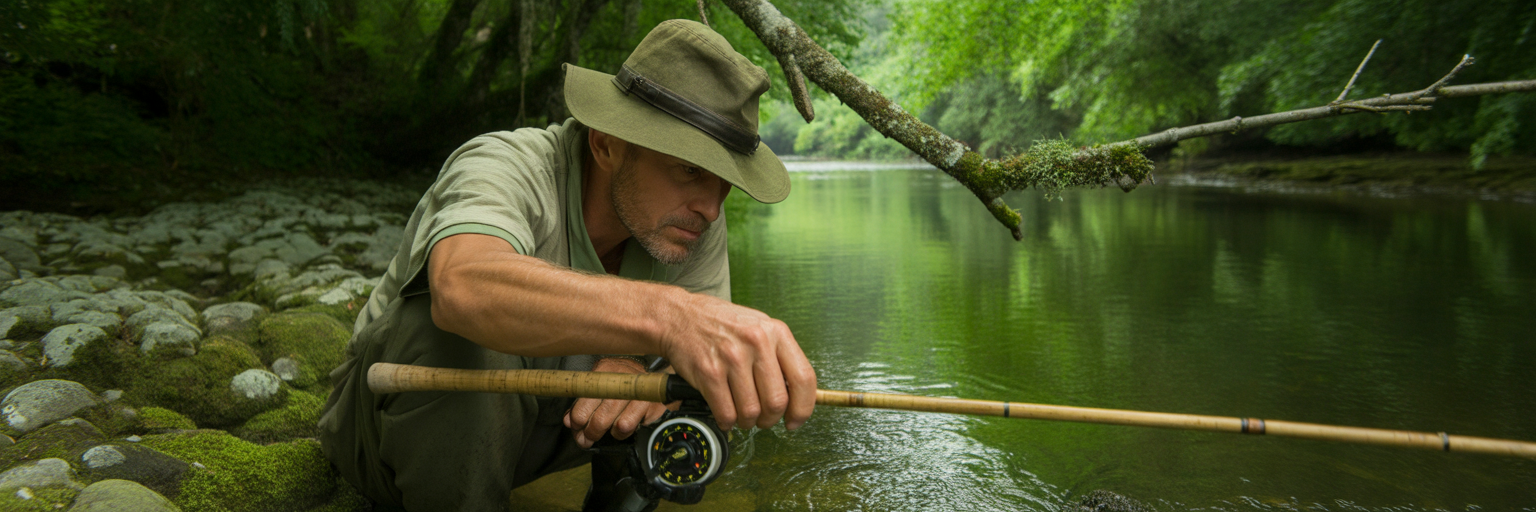
Fishing small creeks and brush-choked streams presents a unique set of challenges. Here, long casts are not only unnecessary but often impossible. The environment demands maneuverability above all else. For these tight quarters, the ideal creek fishing rod length is short, typically between 5 and 6 feet. A short rod is your best defense against snagging on overhanging branches, thick brush, and other vegetation that lines the banks.
Casting in these spots is all about short, delicate presentations. You are not bombing casts across the water, you are making subtle roll casts, side-arm flips, and pitches to nearby pools, eddies, and undercuts. A short rod feels like a natural extension of your arm, making these precise, close-range casts feel effortless and intuitive. It allows you to drop a small spinner or live bait into a promising spot with minimal disturbance.
Beyond casting, portability is a huge factor. When you are hiking along a narrow stream, climbing over fallen logs, and pushing through thickets to get to the next hole, a short rod is far easier to carry. It will not get caught on every branch you pass, making the journey between spots much more enjoyable and letting you focus on finding the fish.
Pairing Rod Length with Your Technique
Ultimately, the best rod length also depends on the specific technique you are using. Different presentations have different requirements for casting, lure action, and hooksets. By matching your rod length to your technique, you create a more efficient and effective system. This final section serves as a practical fishing rod length guide to help you connect the dots.
Here is a breakdown of how to pair rod length with some popular freshwater techniques:
- Jigs & Bottom Baits: A rod between 6’6” and 7’4” is a great choice. This length offers a good balance of sensitivity to feel subtle bites on the bottom and the strong backbone needed for a powerful, upward hookset to drive the hook home.
- Spinnerbaits & Crankbaits: A 7’0” rod is a versatile workhorse for moving baits. It is long enough to make long casts to cover water efficiently, which is key for finding active fish with reaction lures like the ones we recommend for tough conditions. It also remains manageable enough for accurate placement around cover.
- Live Bait & Bobbers: For these techniques, longer is often better. A rod from 7 to 10 feet helps you keep as much line off the water as possible. This allows for a natural, drag-free drift that fools wary fish and gives you the power to pick up a large amount of slack for a quick hookset when your bobber goes down.
Remember, these are field-tested guidelines, not rigid rules. The perfect rod is one that feels comfortable in your hands and helps you present your lure effectively in the waters you fish most often. Consider your own height, casting style, and comfort level to find the length that truly works for you.