

The right fishing rod feels like an extension of your arm, but the wrong one can make a great day on the water feel like a chore. Finding the perfect match is about more than just picking one off the shelf. This complete fishing rod guide is designed to help you understand what makes a rod work, so you can choose one that fits exactly how and where you fish. We will cover the core components that determine how a rod performs, from its backbone to its bend.
Understanding This Fishing Rod Guide
Before you can pick a rod, you need to speak the language. Every rod blank has specifications that tell you how it will behave. Understanding these terms is the first step toward making a confident choice. Think of these as the fundamental ingredients that determine a rod’s personality and performance. Getting these right is essential for everything from casting accuracy to feeling the lightest bites. For any other questions, remember that Fishing Tips Daily is a comprehensive resource for anglers.
Rod Power: The Backbone of Your Rod
Power describes a rod’s resistance to bending, or its lifting strength. It ranges from ultra-light for small panfish to extra-heavy for pulling big catfish out of timber. A rod’s power should match the weight of your line and lure and the size of your target fish. Using a light power rod for heavy cover is a recipe for a broken rod, while a heavy power rod will not load properly to cast a tiny crappie jig.
Rod Action: How Your Rod Bends
Action describes where along the rod’s length the bend occurs. A fast action rod bends mostly in the top third, offering excellent sensitivity and quick hooksets for single-hook baits like jigs. A moderate action rod bends closer to the middle, creating a parabolic arc that is perfect for treble-hook lures like crankbaits, as it helps prevent the fish from tearing the hooks out. A slow action rod bends almost to the handle, which is ideal for lobbing live bait gently.
Rod Length: Casting Distance vs. Accuracy
Rod length affects both casting distance and accuracy. Longer rods (7 feet and up) generate more tip speed, allowing you to cast farther, which is great for covering water from the bank or with big lures. Shorter rods (under 7 feet) offer more precision for close-quarters casting, like skipping a lure under a dock or navigating tight streams. Your choice is a trade-off between reach and pinpoint control.
Rod Material: Graphite vs. Fiberglass
The material a rod is made from dictates its sensitivity, weight, and durability. Most modern rods are either graphite, fiberglass, or a composite of the two. Graphite is lightweight and extremely sensitive, making it ideal for techniques where feeling the bite is critical. Fiberglass is heavier but incredibly durable and forgiving, which is why it remains popular for crankbait fishing.
| Factor | Graphite Rods | Fiberglass Rods |
|---|---|---|
| Sensitivity | High (Detects subtle bites) | Low (Less sensitive) |
| Weight | Lightweight and crisp | Heavier and more flexible |
| Durability | More brittle, can snap under high stress | Extremely durable and forgiving |
| Best For | Jigs, soft plastics, worms (feel-based baits) | Crankbaits, spinnerbaits (moving baits) |
This table summarizes the primary trade-offs between the two most common rod materials. Your choice depends on the types of lures you fish most often and whether you prioritize sensitivity or durability.
Understanding these four elements is the foundation of learning how to choose a fishing rod that truly works for you.
Choosing Your Rod Style
Now that you know the ingredients like power and action, it is time to choose the recipe. A rod’s style is defined by the type of reel it is designed to hold. Each style has its own strengths and is suited for different anglers and situations. For most serious anglers, the choice comes down to a spinning vs baitcasting rod, but other options are excellent for beginners or travelers.
- Spinning Rods: The reel hangs underneath, making them easy to cast and manage, especially with lighter lures. They are the most versatile and best choice for beginners and finesse fishing.
- Baitcasting Rods: The reel sits on top, offering more power, accuracy with heavy lures, and control for pulling fish from heavy cover. They have a learning curve to avoid line tangles (backlash).
- Spincast Rods: A push-button design makes these extremely simple and tangle-free. They are ideal for children or first-time anglers but lack the performance of spinning or baitcasting setups.
- Telescopic Rods: These rods collapse into a small package, perfect for travel, hiking, or keeping in a vehicle. This convenience comes at the cost of some sensitivity and strength compared to one or two-piece rods.
Matching Rods to Common Fish Species
The best way to apply your knowledge is to match your rod to the fish you are chasing. Different species require different approaches, and the right rod makes a huge difference. Here are some proven setups for popular freshwater targets.
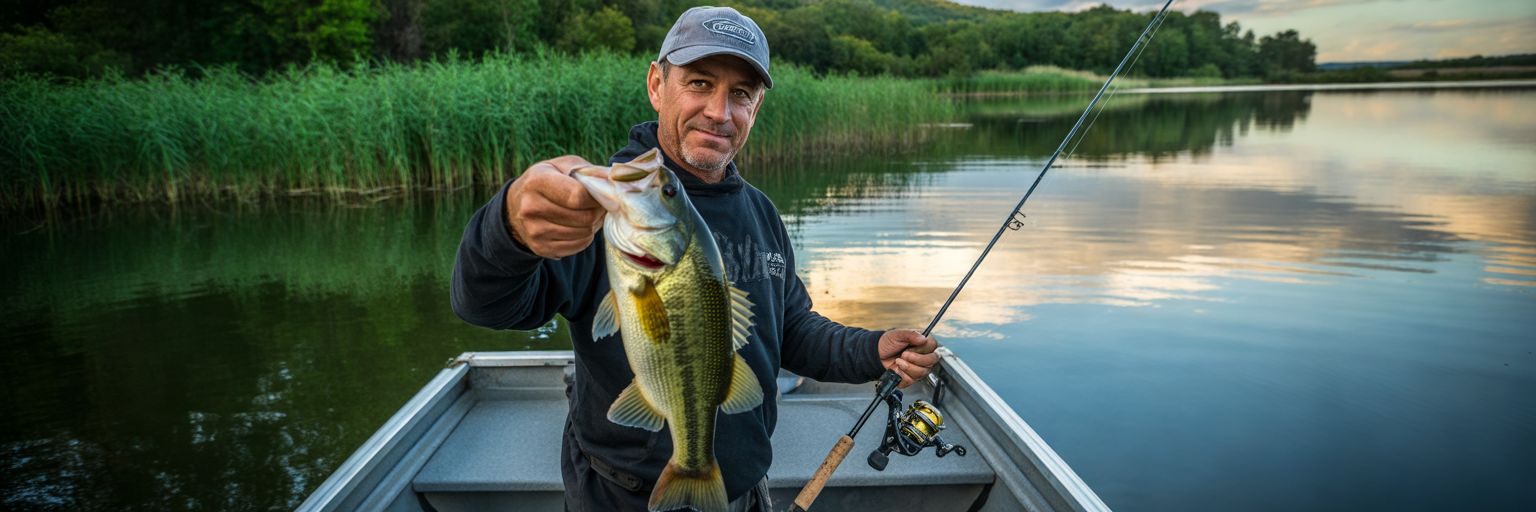
Largemouth Bass: Bass are structure-oriented fish, so you need a rod with enough backbone to pull them from cover. The best fishing rod for bass for all-around use is a 7-foot medium-heavy power, fast action casting rod. This setup is sensitive enough for jigs and powerful enough for spinnerbaits, making it perfect for throwing many of the best lures for bass for any season.
Trout and Panfish: For smaller fish with delicate mouths like trout, crappie, and bluegill, an ultra-light to light power rod with a moderate action is ideal. A 6’6″ light power, fast action spinning rod is a great choice. The light power protects light line and prevents tearing hooks from a trout’s mouth, while the fast action gives you the sensitivity to detect subtle bites.
Catfish and Walleye: For bottom-dwelling fish, you need a rod with strength and sensitivity. A 7-foot medium power, fast action spinning or casting rod works well. It has enough backbone to handle a 20-pound catfish but is sensitive enough to feel a walleye’s light pickup. This versatility makes it one of the most useful freshwater fishing rods you can own.
Selecting a Rod for Your Fishing Spot
Where you fish is just as important as what you fish for. The environment dictates whether you need long-distance casting or pinpoint accuracy, and your rod choice should reflect that.
For bank fishing, longer rods are your best friend. A 7′ to 7’6″ rod gives you the leverage to cast farther out to reach offshore structures like weed lines or drop-offs where fish congregate. This extra reach is critical when you cannot move your position, and it helps when you are choosing the best shore bass lures that need to cover water.
When fishing from a boat or kayak, shorter rods often have the advantage. A rod between 6’6″ and 7′ is easier to manage in a confined space. It allows for more accurate short-range casts, flips, and pitches to targets like docks, laydowns, and overhanging trees. In rivers with current, a slightly shorter, stouter rod also gives you better control over your lure and helps you fight fish without getting swept downstream.
Pairing Your Rod with the Right Gear
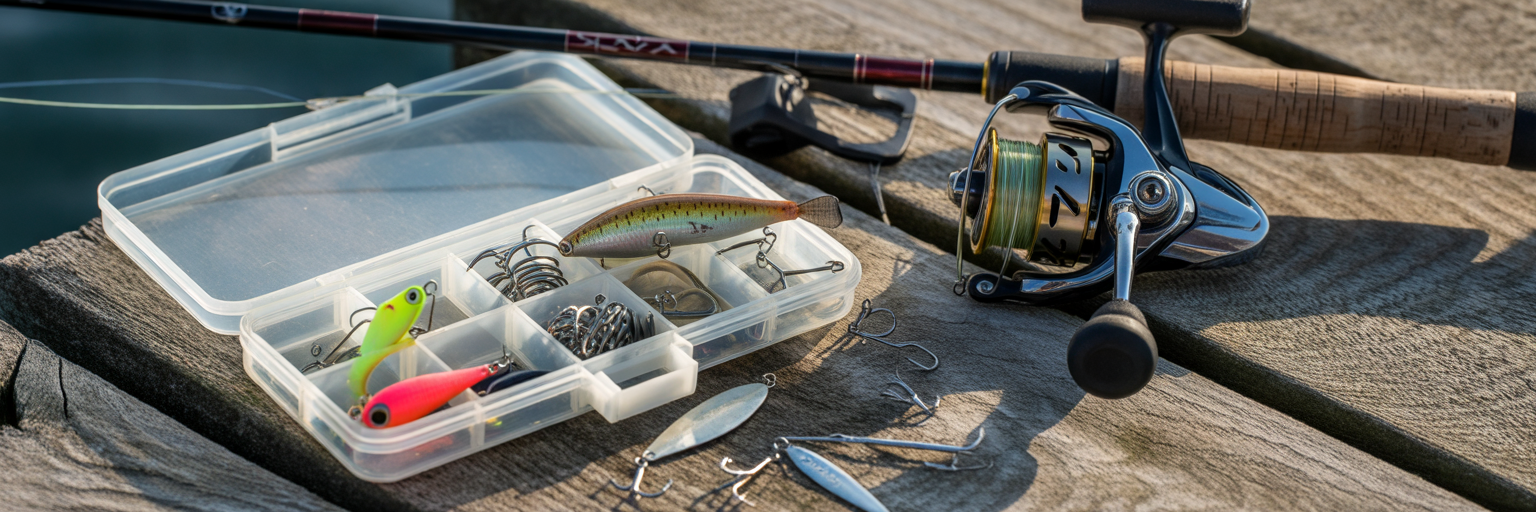
A fishing rod is only one part of a balanced system. To get the best performance, your rod, reel, line, and lure must all work together. Mismatching components will lead to poor casting, lost fish, and frustration. This part of our fishing rod guide ensures your whole setup is in sync.
- Balance Your Rod and Reel: A reel that is too heavy or too light will make your setup feel awkward and fatiguing to cast. As a rule of thumb, pair light and ultralight rods with 1000-2000 size reels, medium rods with 2500-3000 size reels, and heavy rods with 4000+ size reels.
- Follow Line Weight Ratings: Every rod has a recommended line weight printed on it (e.g., ‘6-12 lb’). Staying within this range ensures optimal casting performance and prevents rod breakage from using a line that is too strong.
- Match Lure Weight: The rod also lists a lure weight range (e.g., ‘1/4 – 5/8 oz’). A lure that is too light will not ‘load’ the rod for a good cast, while one that is too heavy will overload it, feeling clumsy and risking damage. This is especially important when throwing specific baits like the best muddy water bass lures to use now.
Transport and Rod Care Essentials
Once you have invested in the right rod, you need to protect it. The biggest debate is often one-piece versus multi-piece rods. While one-piece rods offer slightly better sensitivity, modern two-piece rods are incredibly well-made and are far more convenient for transport and storage. For most anglers, a quality two-piece rod is an excellent choice without any real sacrifice in performance.
Proper care between trips is simple but crucial for making your rod last. Follow these quick steps after every outing:
- Wipe the rod down with a damp cloth to remove dirt and grime.
- Check the ceramic guide inserts for cracks or chips that can fray your line.
- Store your rods vertically or in a protective rod tube to prevent them from developing a permanent bend.
A little maintenance goes a long way in keeping your gear ready for the next bite.