
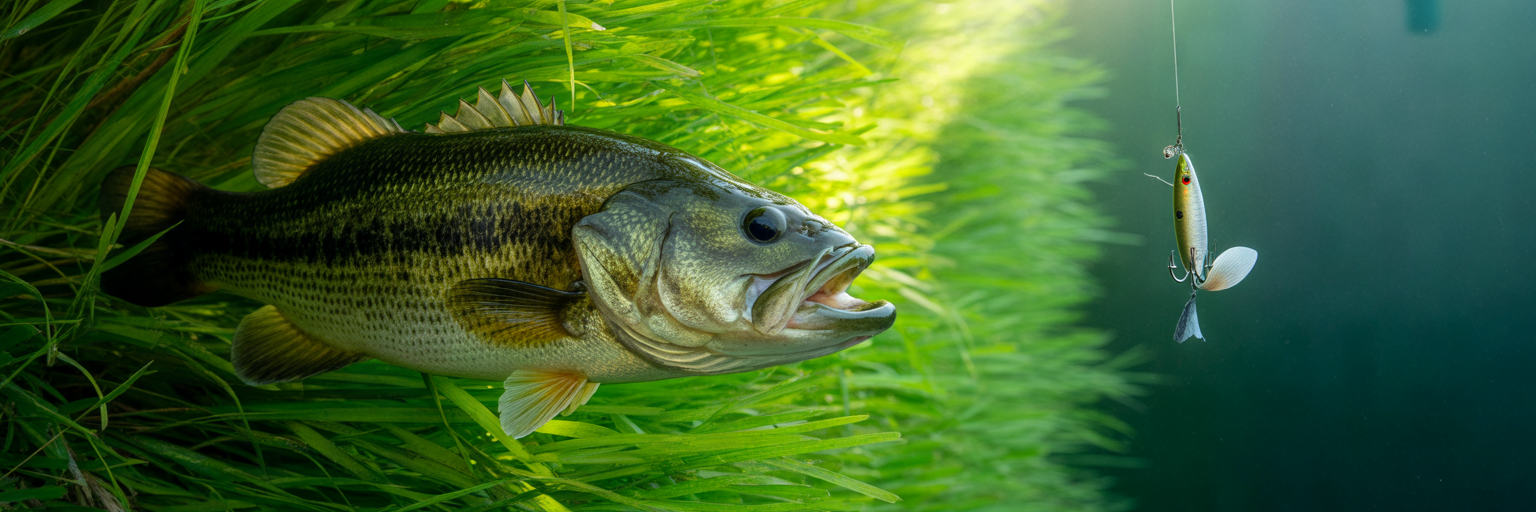
Every angler knows that finding grass means finding a buffet for bass. But simply casting into a massive weed bed is a recipe for frustration and snags. Choosing the right tools from the many best bass lures for submerged grass is the first step, but learning to read the underwater landscape is what truly separates a good day from a great one. Let’s break down how to find the fish and what to throw when you do.
Reading Underwater Grass for More Bass
Think of submerged vegetation as a complete ecosystem for bass. It provides everything they need to thrive, including oxygen, shade from the sun, ambush points to attack prey, and a steady supply of food like bluegill and crawfish. This is why fishing submerged vegetation is so productive. The key is to stop fishing grass beds randomly and start looking for specific, high-percentage spots where bass concentrate.
Instead of seeing a uniform green mass, train your eyes to spot irregularities. These are the locations that hold fish. Look for points where the grass juts out into open water, creating a natural ambush spot. Scan for pockets or holes inside the main grass bed, which act as small clearings where bass can rest. You should also identify inside turns where the grass line forms a corner, creating a perfect spot for a bass to trap baitfish.
The most important feature to learn is the edge of the grass line itself. This is a primary travel corridor for bass as they move between deep and shallow water or patrol for their next meal. Focusing your efforts along these edges dramatically increases your chances of getting a bite. Modern electronics with side-imaging can be a huge help here, revealing hidden ditches, isolated clumps, or subtle changes in the grass that you would otherwise miss. Learning to read this underwater map turns a random search into a calculated hunt.
Top Bass Lures for Submerged Grass Edges
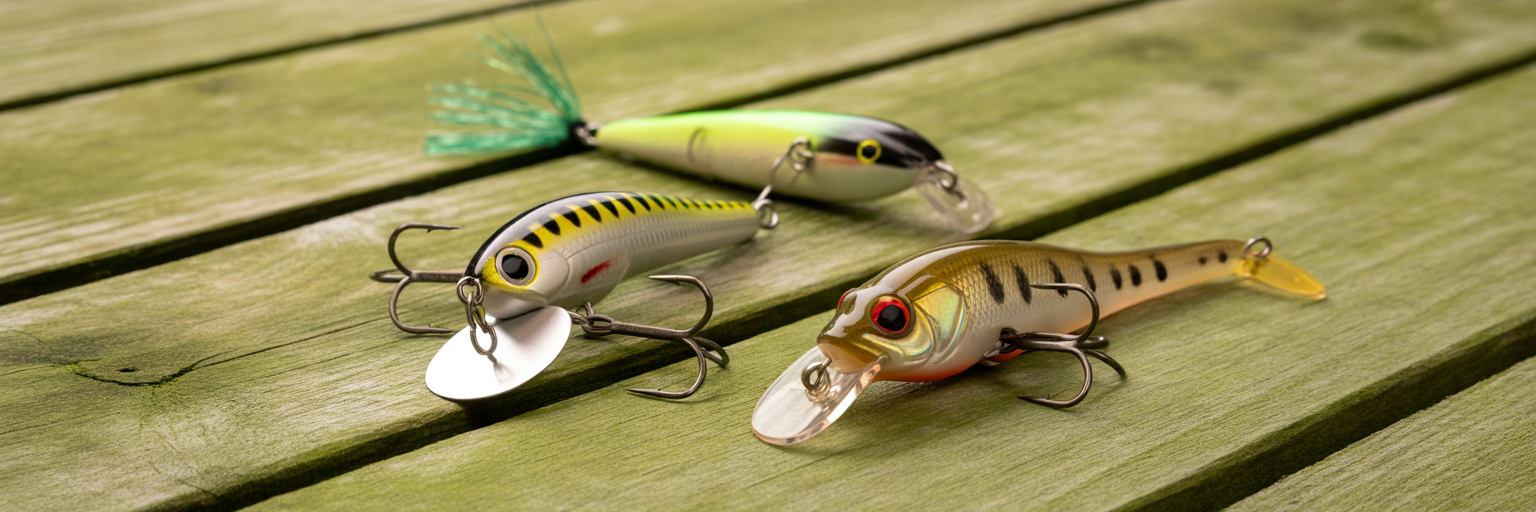
Once you have identified a promising grass edge, you need lures that can work through the cover efficiently. The goal is to use snag proof bass lures that let you cover water and trigger strikes without constantly cleaning weeds off your hook. These three lures are the workhorses for bass fishing grass edges.
The Search Bait: Vibrating Jig
A vibrating jig, or ChatterBait, is an exceptional tool for searching grass flats and edges. Its distinct vibration calls fish out from a distance, and its design allows it to tick the tops of the grass. When it does get bogged down, a sharp rip of the rod tip frees the lure and creates an erratic darting action that triggers an aggressive reaction strike from bass.
The Subtle Approach: Swim Jig
When bass are more pressured or holding in slightly thicker cover, the swim jig is your go-to. It offers a more subtle presentation that slides through vegetation cleanly. Choose a swim jig with a pointed head and pair it with a streamlined soft plastic trailer to minimize snags. You can swim it steadily along the edge or hop it through thinner patches to imitate a fleeing bluegill or shad.
The Precision Tool: Texas Rig
For picking apart specific targets, nothing beats a Texas-rigged soft plastic. This setup is the ultimate precision tool for pitching into small pockets, dragging along the bottom at the base of the grass line, or working through dense clumps. Its weedless nature allows you to place it exactly where a bass is hiding with confidence. While these are top choices for grass, understanding the full spectrum of the best lures for bass will make you a more versatile angler in all conditions.
| Lure Type | Primary Use | Snag Resistance | Ideal Conditions |
|---|---|---|---|
| Vibrating Jig | Searching flats and edges | Moderate (Rips free) | Active fish, light to moderate grass |
| Swim Jig | Working through thicker cover | High | Pressured fish, defined grass lines |
| Texas Rig | Pitching to specific targets | Very High | Pockets, clumps, and bottom contact |
Tackling Matted Grass and Thick Cover
Fishing the edges is one thing, but attacking the thick, impenetrable canopy of matted surface vegetation requires a different mindset and heavier gear. As highlighted by experts at Western Bass, the strategy for the edge is completely different from tackling a thick mat. This is power fishing, plain and simple.
Your primary weapon here is a hollow-body frog. The key is to “walk” it across the top of the mat with short, sharp twitches of your rod tip, making it dart side to side. The most important part of this technique is the pause. When you come to a hole or thinner spot in the mat, let the frog sit still for a few seconds. This gives a bass hiding underneath time to locate the lure and explode on it.
When the cover is too thick even for a frog, it is time to start punching. This is a vertical, forceful technique designed to get your lure through the dense mat to the fish below. The rig is specific: start with a heavy 1 to 2 ounce tungsten weight, add a punch skirt for extra bulk and attraction, and finish with a stout flipping hook and a compact soft plastic bait. You pitch this rig up and let it crash through the mat. This is not light-tackle fishing. You absolutely need a heavy-power rod and strong, 65-pound test braided line to hook a bass and pull it out of that jungle.
Mastering Your Retrieve to Trigger Bites
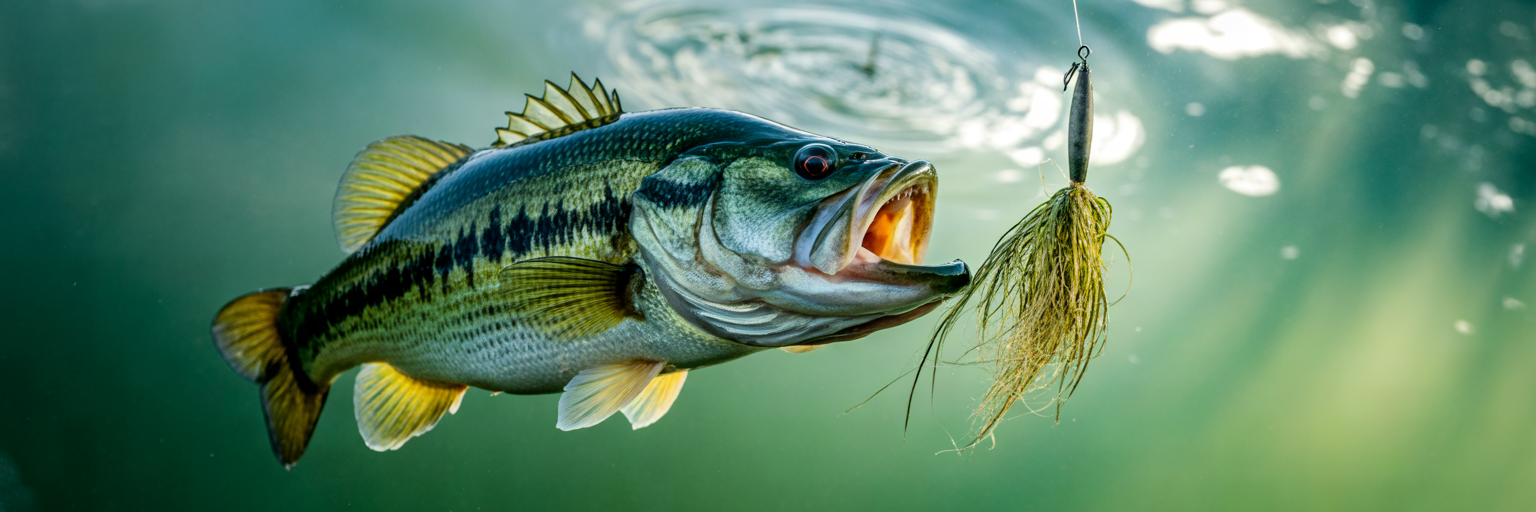
Having the right lure is only half the story. The real magic happens in how you work it to bring it to life and convince a bass to bite. A simple, steady retrieve is often the least effective way to fish. You need to introduce changes in speed and direction to trigger a bass’s predatory instinct. Here are a few techniques that will get you more bites.
- Vary Your Cadence: When using moving baits like a vibrating jig or swim jig, never just reel it in straight. Introduce sudden pauses, quick bursts of speed, or sharp twitches of the rod. This erratic movement makes a following bass commit, fearing its meal is about to escape.
- The ‘Hang and Rip’: This is a critical technique for learning how to fish grass lines. Intentionally steer your moving bait so it bogs down in the grass. Instead of gently pulling it free, give your rod a sharp, upward snap to rip the lure loose. The strike almost always happens in the split second after the lure breaks free and darts away.
- Control the Fall: With vertical presentations like a Texas rig or a punch rig, the speed of the fall matters. Experiment with different weight sizes. Sometimes bass want a fast, crashing fall that triggers a reaction bite. Other times, a slower, more controlled descent gets their attention. Pay close attention, as the bite often comes on the initial fall or right as the lure settles on the bottom.
Essential Gear for Fishing Grassy Waters
Showing up to a grassy lake with the wrong gear is a surefire way to end your day in frustration. Having the right tools for the job gives you the power and control needed to effectively present your lures and, more importantly, land the fish you hook. Here is the ideal tackle system for fishing grass edges and thick mats.
- Rod: A 7-foot to 7-foot-6-inch baitcasting rod with a medium-heavy to heavy power and a fast action is perfect. This length provides casting distance and leverage, while the power gives you the backbone needed to pull a big bass from thick cover.
- Reel: A high-speed baitcasting reel with at least a 7.1:1 gear ratio is crucial. When a bass bites in heavy cover, you need to pick up slack line quickly to get a solid hookset and turn the fish’s head before it can bury itself deeper in the grass.
- Line: Braided line is non-negotiable for this type of fishing. Its zero-stretch quality ensures a solid hookset, and its strength allows it to cut through grass stalks instead of wrapping around them. Use 30 to 50-pound braid for moving baits along edges and step up to 50 to 65-pound braid for punching and frogging in the thickest mats.
For more gear guides and tips, anglers can explore all the resources available at Fishing Tips Daily.