
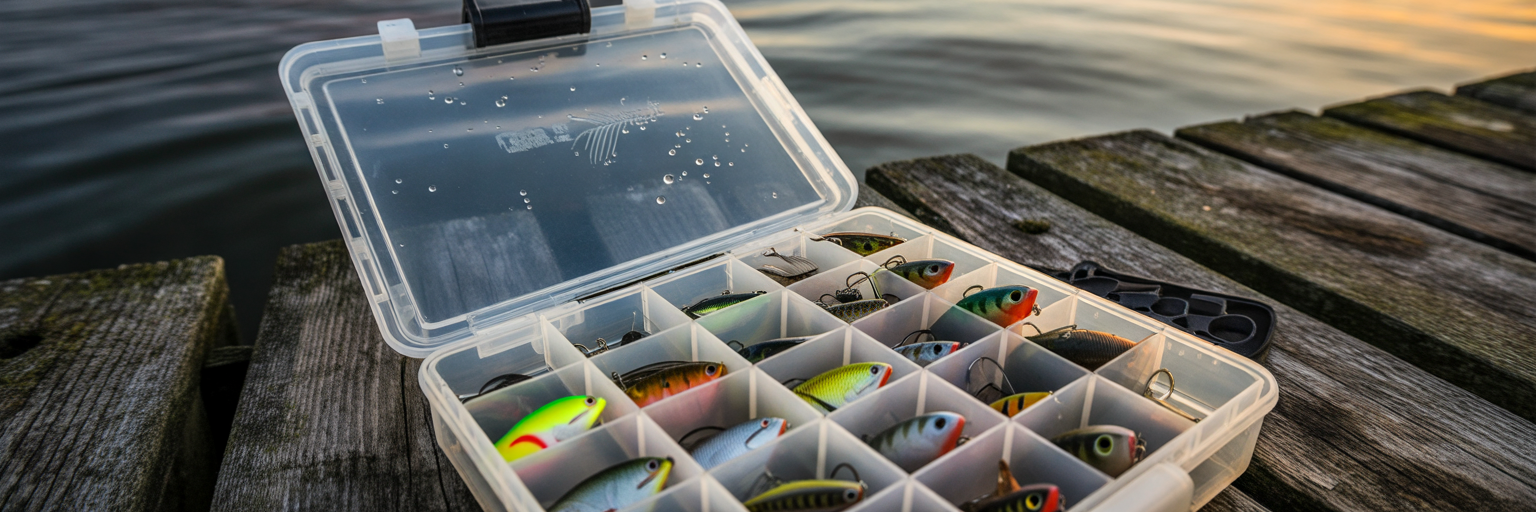
A Simple Guide to the Best Lures for Bass
We have all been there. You open a tackle box packed with lures of every shape and color, yet you feel completely unsure which one to tie on. This is a common feeling for anglers, not a sign of failure. Success on the water comes from understanding how to match a few versatile lure types to the conditions, not from owning every lure ever made. This guide will give you a practical framework for choosing the best lures for bass based on the season, the cover you are fishing, and the clarity of the water.
Think of this as a system. Instead of guessing, you will learn to read the water and your calendar to make confident choices. By the end of this article, you will have a clear, systematic approach to lure selection that will help you spend less time wondering and more time catching fish.
Matching Lures to Seasonal Bass Behavior
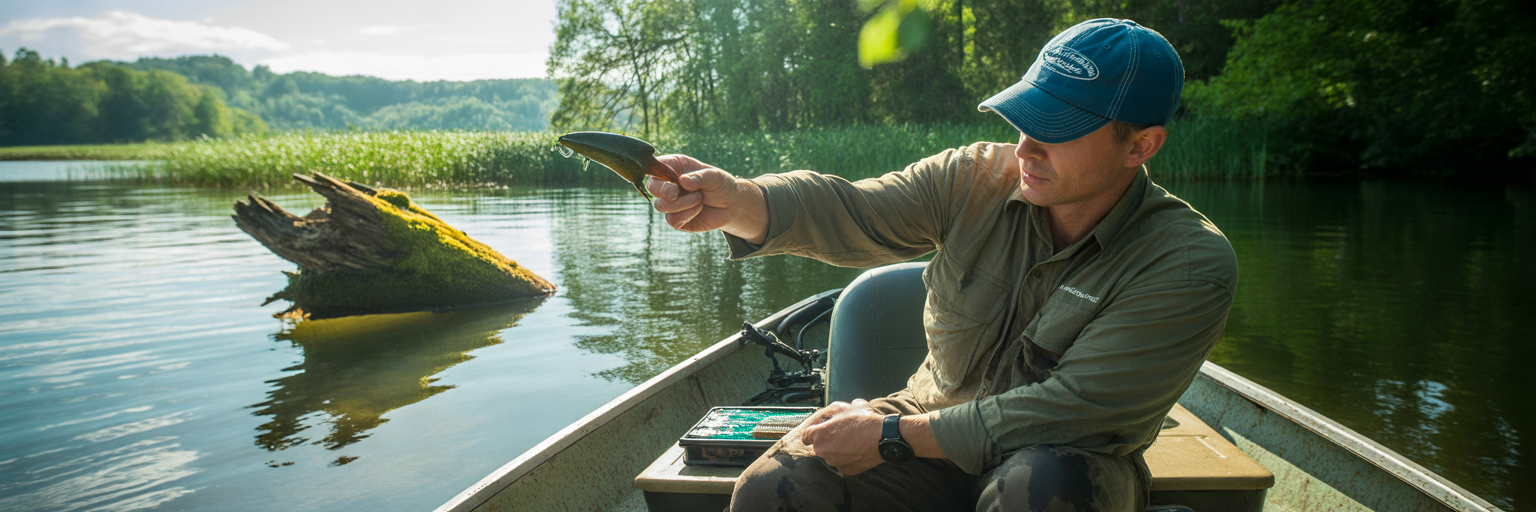
The first step to consistent success is understanding that a bass’s behavior changes dramatically throughout the year. What works in the spring might get ignored in the summer. While these seasonal frameworks are a reliable guide, expert anglers always adapt to the specific conditions they observe on any given day. As highlighted in the guide on Seasonal Lure Selection from BassResource, understanding these movements is foundational. Let’s break down the year and the lures that match each phase.
Spring (Pre-Spawn & Spawn)
As the water warms, bass move from their deep winter haunts toward shallow spawning flats. They become aggressive and territorial. Your job is to cover water to find these migrating fish and then use baits that trigger strikes from bass guarding their nests. The right bass lures for spring capitalize on this behavior.
- Lipless Crankbait: Perfect for covering large, shallow flats quickly to locate active fish.
- Bladed Jig (ChatterBait): The vibration and flash draw aggressive strikes from pre-spawn bass staging near cover.
- Texas-Rigged Soft Plastic: A creature bait or lizard pitched to a spawning bed is hard for a protective bass to ignore.
Summer (Post-Spawn & Deep Water)
After the spawn, many bass move to deeper, cooler water or seek shade during the heat of the day. They often feed most actively during low-light periods like early morning and late evening. Your lure selection should reflect this split personality. Effective summer bass fishing lures match these patterns.
- Topwater Walking Bait: Ideal for early and late in the day when bass are looking up to feed on baitfish.
- Deep-Diving Crankbait: Allows you to reach bass holding on offshore structures like ledges, humps, and points.
- Football Jig: A great tool for slowly dragging along deep bottoms to imitate crawfish and other forage.
Fall (Transition & Feeding Frenzy)
Cooling water temperatures signal to bass that winter is coming, triggering a major feeding response. Bass often group up and aggressively chase schools of baitfish that are moving into the backs of creeks. Your goal is to imitate this fleeing forage. The best fall bass lures are often reaction baits that you can fish quickly.
- Spinnerbait: The flash and vibration perfectly mimic a small school of baitfish and cover water efficiently.
- Squarebill Crankbait: Excellent for banging off shallow wood and rock cover where bass ambush prey.
- Jerkbait: With its erratic, darting action, a jerkbait looks just like a wounded shad, an easy meal for a hungry bass.
Winter (Cold Water & Slow Metabolism)
In cold water, a bass’s metabolism slows way down. They will not chase a fast-moving lure. Success in winter requires downsizing your presentation and slowing everything down. You need to put a subtle, tempting meal right in front of their face.
- Jigging Spoon: Fished vertically over deep structure, this lure can be dropped directly to fish you see on your electronics.
- Blade Bait: Small, subtle vibrations are just enough to trigger a lethargic bass in cold water.
- Ned Rig: This finesse presentation with its slow fall is often the only thing that will get a bite when the water is frigid.
How to Fish Different Types of Cover
Once you have considered the season, the next question is where the bass are positioned. Bass are ambush predators, and they use cover to hide and attack prey. A jig is a great spring lure, but you fish it differently in thick grass than you do around a boat dock. Adapting your lure choice to the specific structure is key.
Grass and Vegetation
Thick grass beds provide oxygen, shade, and ambush points for bass. The challenge is presenting a lure without getting constantly snagged. This is where weedless presentations shine. When you are planning for bass fishing in grass, think about lures that can slide through or ride over the top of the vegetation.
- Texas-Rigged Plastic: The classic weedless rig. A worm or creature bait with the hook point buried in the plastic allows you to pull it through the thickest cover.
- Hollow-Body Frog: Fished over matted grass or lily pads, a frog draws explosive topwater strikes from bass hiding below.
Wood (Laydowns, Stumps, Docks)
Fallen trees, submerged stumps, and dock pilings are prime real estate for bass. They use this hard cover as a current break and an ambush point. The key here is often triggering a reaction strike by making your lure contact the wood.
- Squarebill Crankbait: Designed to deflect off wood, its erratic action after hitting a branch often triggers an immediate bite.
- Pitching Jig: A compact jig can be pitched or flipped accurately into the tightest spots in a laydown or under a dock.
Rock (Boulders, Riprap, Points)
Rocky bottoms and points are magnets for crawfish, a favorite food for bass. Lures that maintain bottom contact and imitate the look and movement of a crawfish are extremely effective here. You want a lure that you can feel crawling over the rocks.
- Football Jig: The wide head of a football jig helps it crawl over rocks without getting wedged as easily as other jig types.
- Craw-Pattern Crankbait: A crankbait that dives down and grinds along a rocky bottom is a classic way to catch bass relating to this type of structure.
Choosing Lure Color and Profile for Water Clarity
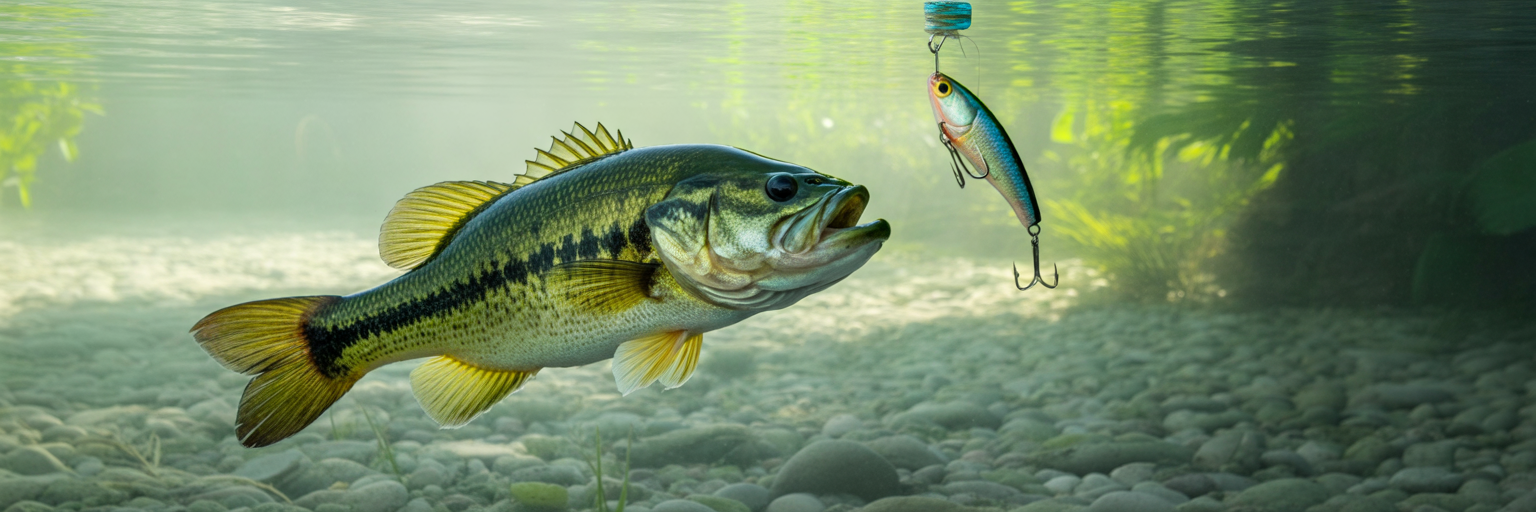
Now that you know when and where to fish, let’s talk about what the lure should look like. The right color and profile depend almost entirely on water clarity. In clear water, bass hunt by sight and can be easily spooked by unnatural presentations. In murky water, they rely more on vibration and silhouette to find their food. The fundamental rule for how to choose bass lure color is to adjust for visibility.
A good starting point is the “Match the Hatch” principle. Simply put, try to use lures that imitate the primary forage in the lake or river you are fishing. If the lake is full of shad, a silver or white lure is a great choice. If crawfish are the main food source, go with browns, oranges, and greens. From there, you can fine-tune your selection based on the water clarity.
| Water Clarity | Lure Characteristics | Primary Colors |
|---|---|---|
| Clear Water (Visibility > 4 ft) | Subtle action, realistic profile, smaller size | Green Pumpkin, Watermelon, Natural Shad, Ghost Minnow |
| Stained Water (Visibility 2-4 ft) | Moderate vibration, distinct profile, some flash | Black/Blue, Chartreuse/White, Firetiger, Natural Craw |
| Muddy Water (Visibility < 2 ft) | Strong vibration/rattle, bold silhouette | Solid Black, Junebug, Bright Chartreuse, Orange |
This table provides a quick reference for matching lure color and action to water clarity. These are starting points; always be prepared to experiment based on local forage and light conditions.
Building a Versatile Bass Lure Selection
You do not need a boatload of tackle to be a successful bass angler. With a small, well-chosen selection, you can confidently handle most situations you will encounter on ponds, lakes, and rivers. Instead of buying one of everything, focus on building a core collection around a few essential lure categories. This approach will save you money and make your decisions on the water much simpler.
Start with what we can call the “Essential Four” lure types:
- A Jig: The most versatile lure for slow, bottom-oriented presentations that imitate crawfish.
- A Moving Bait: A spinnerbait or bladed jig for covering water and imitating schools of baitfish.
- A Crankbait: Perfect for targeting specific depth zones and generating reaction strikes from fish holding on structure.
- Soft Plastics: A bag of stick worms or creature baits can be rigged in dozens of ways for both aggressive and finesse applications.
To keep it simple, follow the “two-color, two-weight” rule. For each of these lure types, get one in a natural color (like green pumpkin or shad) and one in a high-contrast color (like black and blue or chartreuse). For jigs and Texas rigs, having a couple of different weights (like 1/4 oz and 1/2 oz) allows you to adapt to different depths and levels of wind. This simple system gives you a powerful and adaptable toolkit. This framework provides a solid foundation, and for more detailed guides on specific techniques, gear, and local fishing spots, the comprehensive information at Fishing Tips Daily is your next step.