
Streamer & Wet-Fly Fishing
Streamers imitate swimming prey; wet flies can represent subsurface insects and are often swung through current. Both are subsurface fly methods, but stripping and swinging create different travel paths.
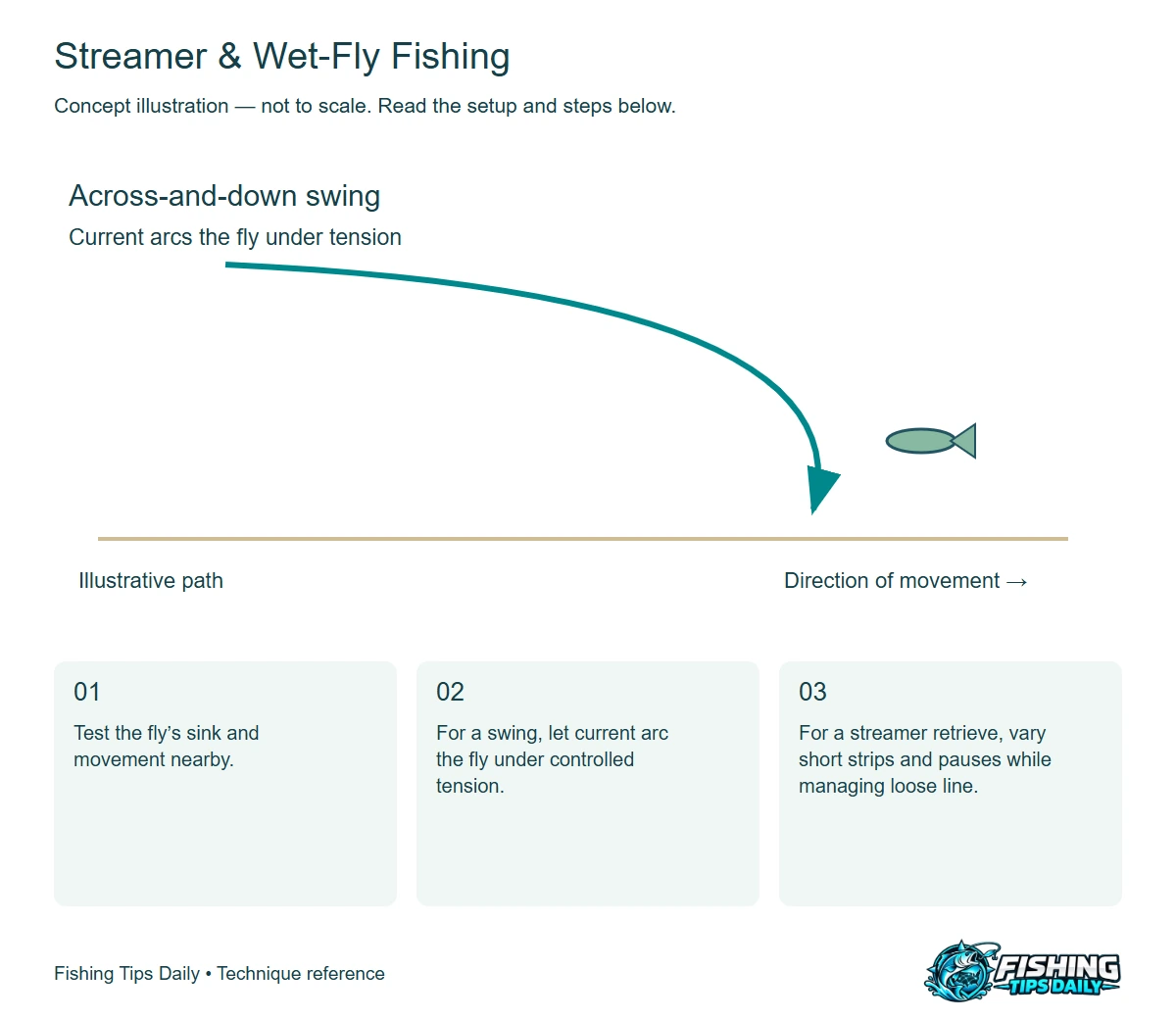
Build a setup that does the job.
Match fly weight and size to the rod, leader, and line. Floating and sinking systems reach different levels. Keep a safe casting lane, particularly with weighted flies.
Make the first test close enough to observe. Check the connection, the hook opening, and whether the offering follows the intended path. Correct a fouled or poorly balanced setup before adding distance.
How to fish it, step by step.
- Test the fly’s sink and movement nearby.
- Cast across or upstream of the intended lane as the presentation requires.
- For a swing, let current arc the fly under controlled tension.
- For a streamer retrieve, vary short strips and pauses while managing loose line.
- Maintain contact on a take and use a hookset suitable to the fly and line angle.
A useful first test.
Along a pool edge, let a streamer settle before stripping. If it passes too high, change sink time or line system rather than simply stripping harder.
Keep the productive detail repeatable: position, depth, speed, or pause. Change one of those at a time so you can tell what improved the presentation.
Variations—and what changes.
Wet-fly swings, streamer strips, and dead-drift streamers are distinct variations. Choose the movement that matches the feeding lane.
Read the symptom before changing everything.
Fly crosses too quickly
Change angle or mend before the swing accelerates.
Loose line tangles
Organize stripped line and shorten the amount you are managing.
Know when to change methods.
If the offering cannot reach the target, repeatedly snags, or demands equipment you cannot control comfortably, choose another presentation from this family. Keep the location clue you learned; changing a rig does not require starting the whole search over.
Use tackle and bait permitted on the water, and plan safe access and fish handling. The illustrations explain concepts; they do not replace equipment instructions or current local rules.