
Tight-Line Nymph Fishing
Tight-line nymphing uses close line control and a visible leader section or feel to follow a weighted fly. Keeping excess fly line off conflicting currents can reduce drag at short range.
Build a setup that does the job.
Choose a leader system and weighted fly suitable for the rod and water. A visible sighter helps show changes. Keep casts controlled and avoid overloading a fine outfit with heavy flies.
Make the first test close enough to observe. Check the connection, the hook opening, and whether the offering follows the intended path. Correct a fouled or poorly balanced setup before adding distance.
How to fish it, step by step.
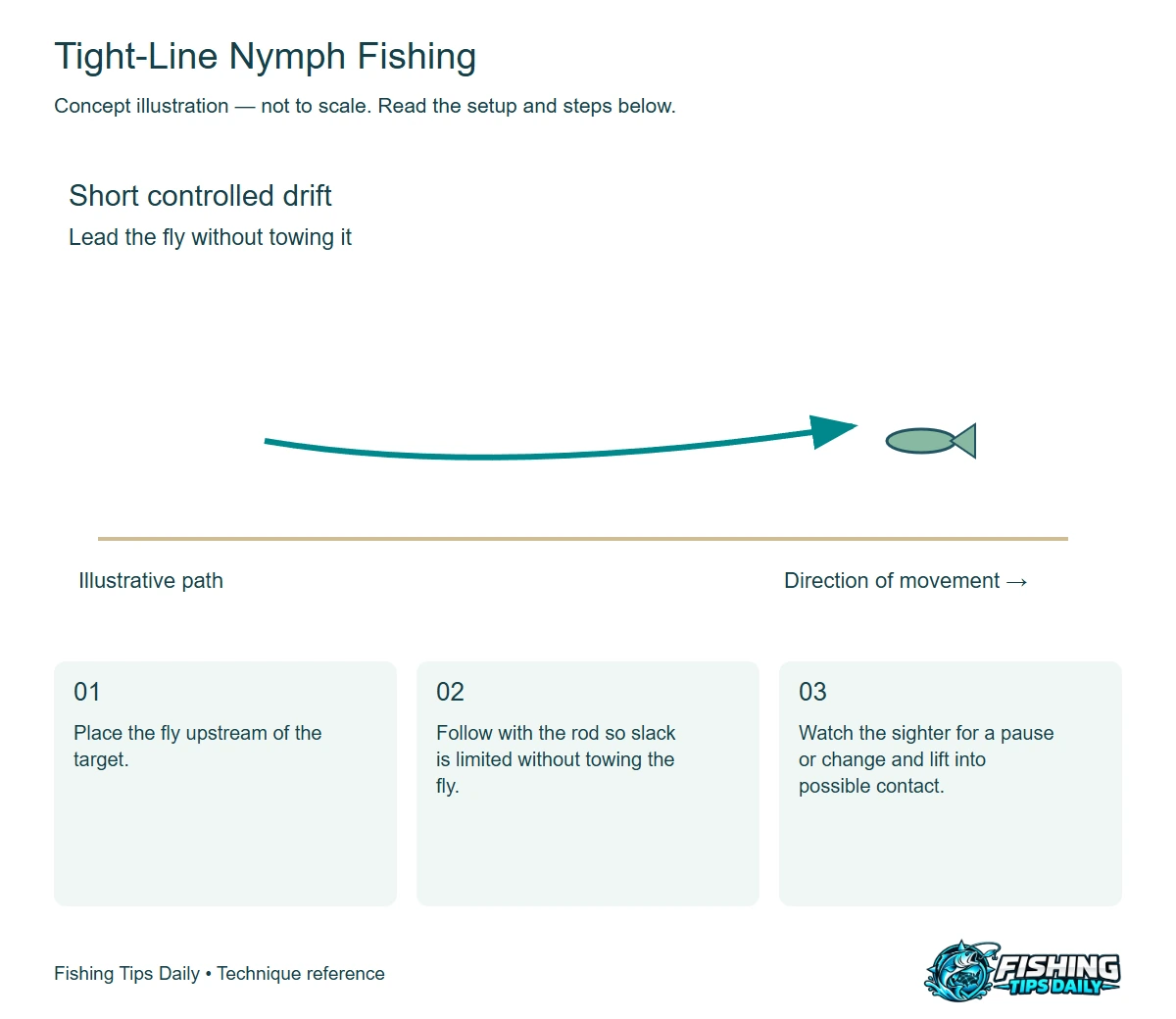
- Place the fly upstream of the target.
- Allow it to sink before leading the drift.
- Follow with the rod so slack is limited without towing the fly.
- Watch the sighter for a pause or change and lift into possible contact.
- Move or recast before the leader angle pulls the fly out of the useful zone.
A useful first test.
Behind a boulder, work a short drift through the pocket. If the fly swings up immediately, reduce forward pulling and give it more settling time.
Keep the productive detail repeatable: position, depth, speed, or pause. Change one of those at a time so you can tell what improved the presentation.
Variations—and what changes.
Euro-nymphing covers several leader and presentation systems. The shared skill is controlled contact, not one mandatory leader recipe.
Read the symptom before changing everything.
Fly is being towed
Slow the lead and reduce tension.
No contact at all
Shorten the reach or adjust weight instead of extending the drift blindly.
Know when to change methods.
If the offering cannot reach the target, repeatedly snags, or demands equipment you cannot control comfortably, choose another presentation from this family. Keep the location clue you learned; changing a rig does not require starting the whole search over.
Use tackle and bait permitted on the water, and plan safe access and fish handling. The illustrations explain concepts; they do not replace equipment instructions or current local rules.