
Neko Rig Fishing
A Neko rig combines a worm hooked around its middle with a small weight inserted into one end. The weighted end leads the fall and helps establish a bottom-oriented posture.
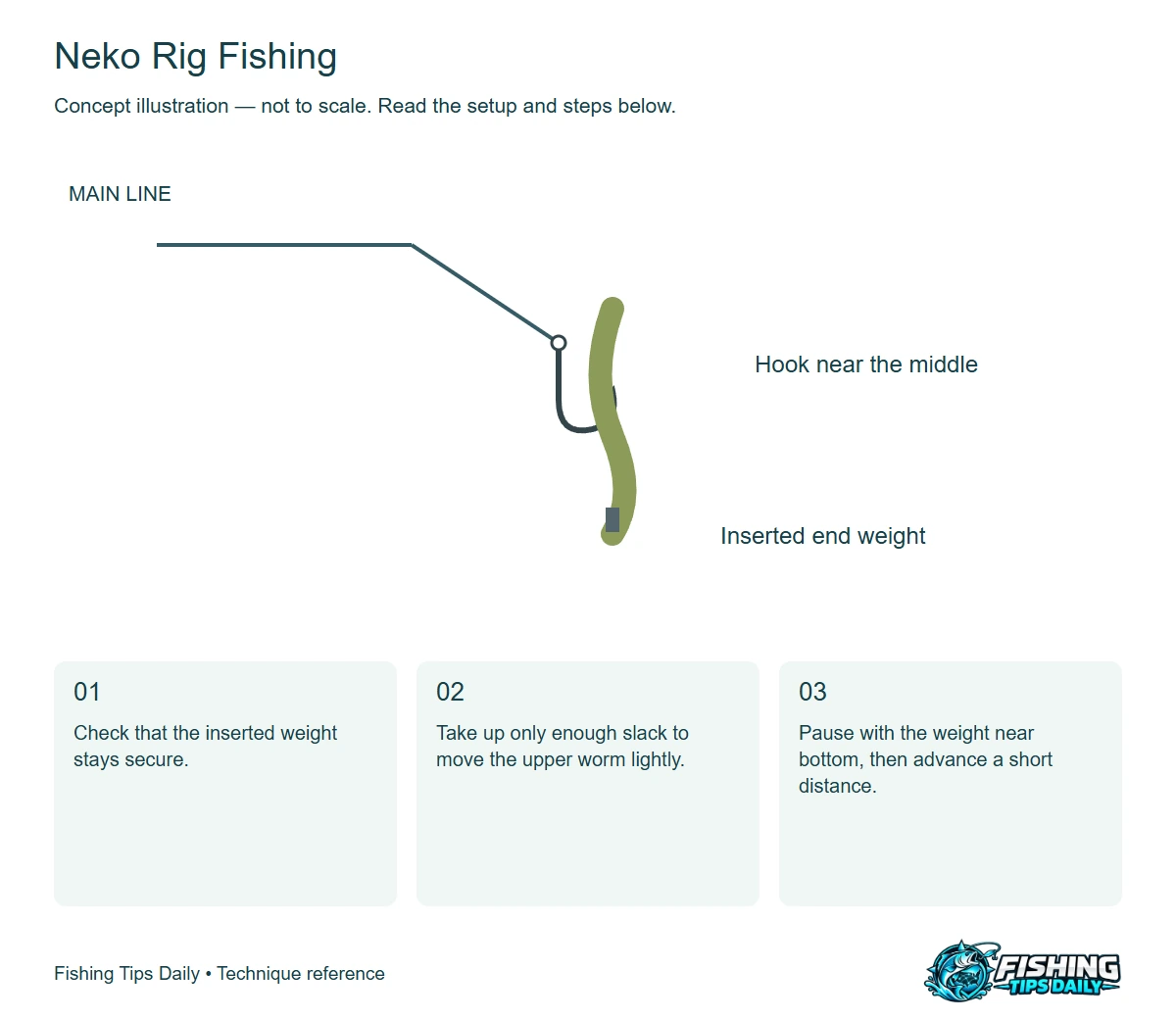
Build a setup that does the job.
Insert a compatible nail weight securely into one end. Position a suitable hook or ring so the worm can flex and the hook is not blocked. Keep the weight proportionate to the rod and desired descent.
Make the first test close enough to observe. Check the connection, the hook opening, and whether the offering follows the intended path. Correct a fouled or poorly balanced setup before adding distance.
How to fish it, step by step.
- Check that the inserted weight stays secure.
- Cast and let the weighted end settle.
- Take up only enough slack to move the upper worm lightly.
- Pause with the weight near bottom, then advance a short distance.
- Reel into a bite and apply steady setting pressure.
A useful first test.
Beside a clean dock edge, compare the controlled nose-first fall with a weightless wacky fall. Choose the one that reaches the fish without drifting into the posts.
Keep the productive detail repeatable: position, depth, speed, or pause. Change one of those at a time so you can tell what improved the presentation.
Variations—and what changes.
Hook placement and worm buoyancy alter posture. A Neko rig is not simply any weighted wacky hook; the inserted end weight creates its defining fall.
Read the symptom before changing everything.
Weight falls out
Use a compatible secure weight and replace torn plastic.
Worm lies pinned
Reduce tension and weight if you are flattening the presentation.
Know when to change methods.
If the offering cannot reach the target, repeatedly snags, or demands equipment you cannot control comfortably, choose another presentation from this family. Keep the location clue you learned; changing a rig does not require starting the whole search over.
Use tackle and bait permitted on the water, and plan safe access and fish handling. The illustrations explain concepts; they do not replace equipment instructions or current local rules.