
Ned Rig Fishing
A Ned rig pairs a small jighead with a compact plastic for a subtle fall and modest movement. It can swim and glide as well as rest near bottom; constant bottom dragging is not required.
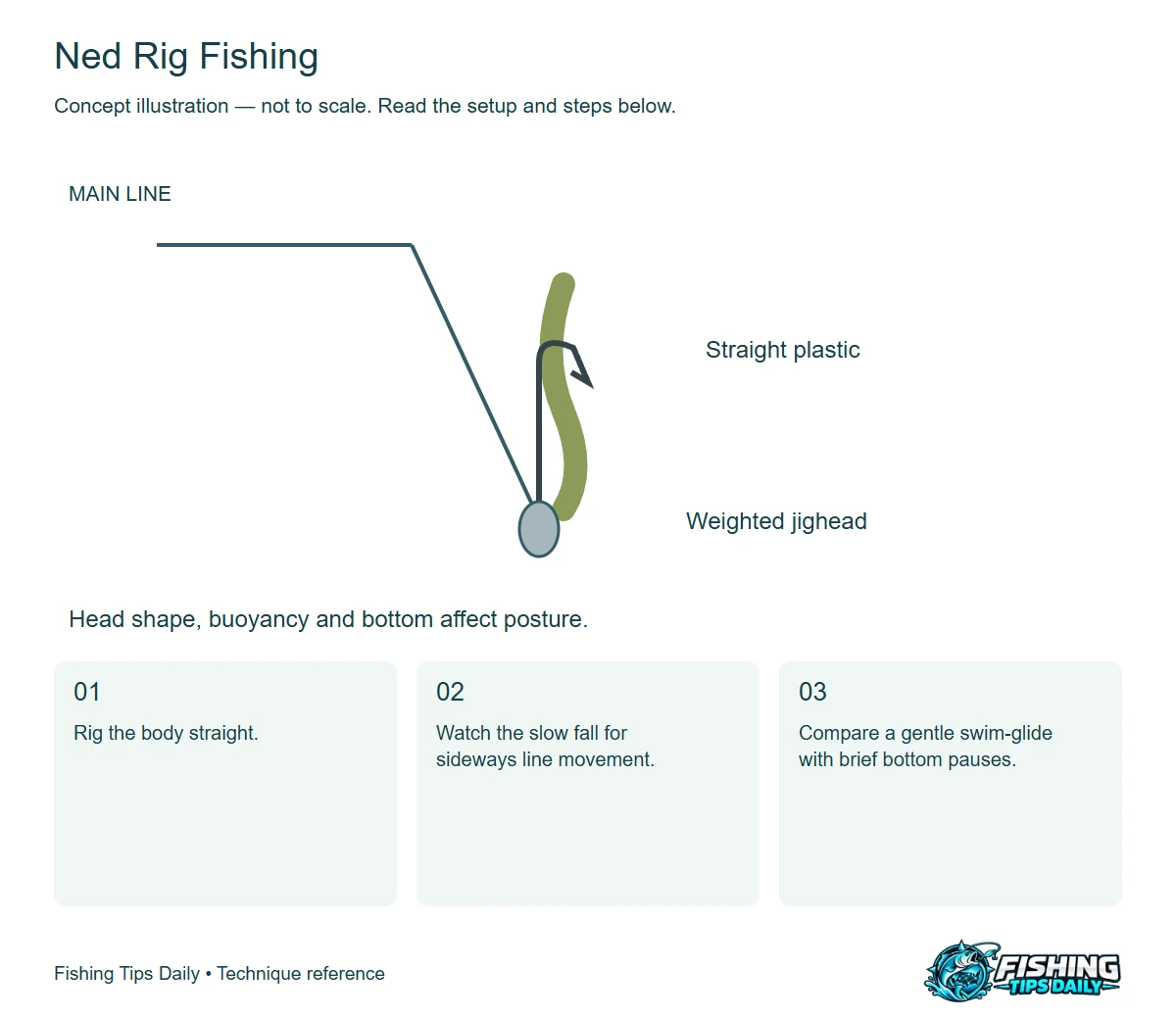
Build a setup that does the job.
Use a light head that still gives useful control, a straight compact body, and tackle that casts the total weight. Fine hooks need steady pressure rather than an aggressive heavy-cover hookset.
Make the first test close enough to observe. Check the connection, the hook opening, and whether the offering follows the intended path. Correct a fouled or poorly balanced setup before adding distance.
How to fish it, step by step.
- Rig the body straight.
- Cast beyond a reachable transition.
- Watch the slow fall for sideways line movement.
- Compare a gentle swim-glide with brief bottom pauses.
- Reel into contact and keep steady pressure after a bite.
A useful first test.
On a gravel bank, retrieve slowly enough to let the bait glide near bottom. If it wedges into every rock, reduce dragging and compare a lighter head.
Keep the productive detail repeatable: position, depth, speed, or pause. Change one of those at a time so you can tell what improved the presentation.
Variations—and what changes.
Mushroom-style heads are common, but the essential lesson is a compact, controllable finesse presentation. Buoyant bodies and sinking bodies settle differently.
Read the symptom before changing everything.
Frequent rock snags
Lift or swim it instead of forcing continuous contact.
Body slides down
Inspect the keeper and replace torn plastic.
Know when to change methods.
If the offering cannot reach the target, repeatedly snags, or demands equipment you cannot control comfortably, choose another presentation from this family. Keep the location clue you learned; changing a rig does not require starting the whole search over.
Use tackle and bait permitted on the water, and plan safe access and fish handling. The illustrations explain concepts; they do not replace equipment instructions or current local rules.