
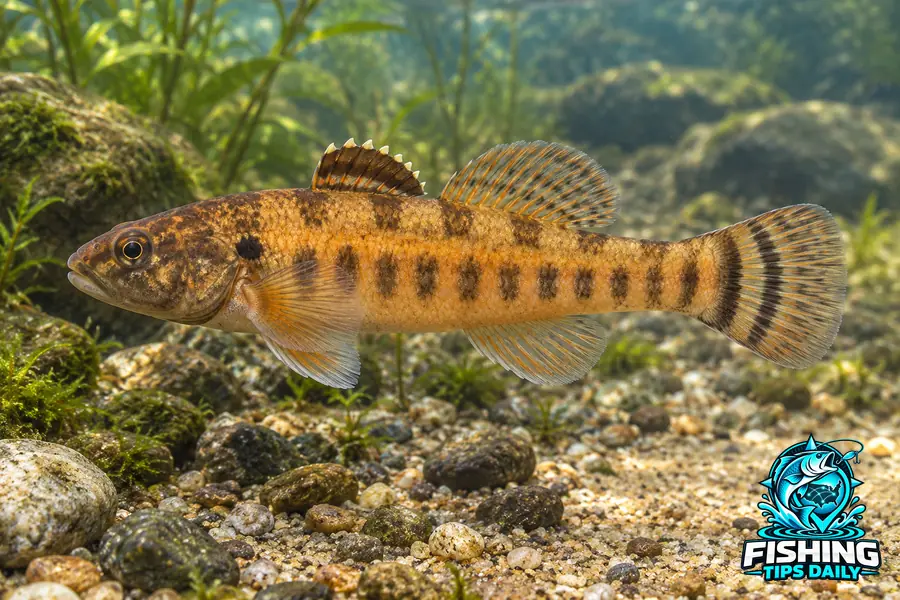
Range and Identity
Etheostoma kennicotti is recorded in selected Ohio tributaries and the Green, upper Cumberland and Tennessee drainages. These records span several central and southeastern states. The named systems describe the range more accurately than assuming occupancy of every river within a state boundary.
Habitat and Behavior
Adults live in rocky pools of headwaters, creeks and small rivers. The pool setting is part of the account and should not be replaced by a universal fast-riffle description. Neighboring darters may share a drainage while selecting different stream positions.
Food and Life History
The upper reference is 8.3 centimeters total length, with five centimeters as common. Foods include midge larvae, mayfly and stonefly nymphs, and crustaceans. Eggs are attached in clusters to the underside of stones, where males guard them.
Field Note
Include the pool and tributary with identification photographs. Records of male care are strongest when the adult and its egg cluster are directly associated, rather than simply observed nearby.
All Lakes With Stripetail Darter
Browse lakes and reservoirs with documented Stripetail Darter records, listed alphabetically. Records do not establish current abundance or public access. Check the evidence and managing authority for the water you choose.
No published lakes are currently linked to this species in our confirmed records.