
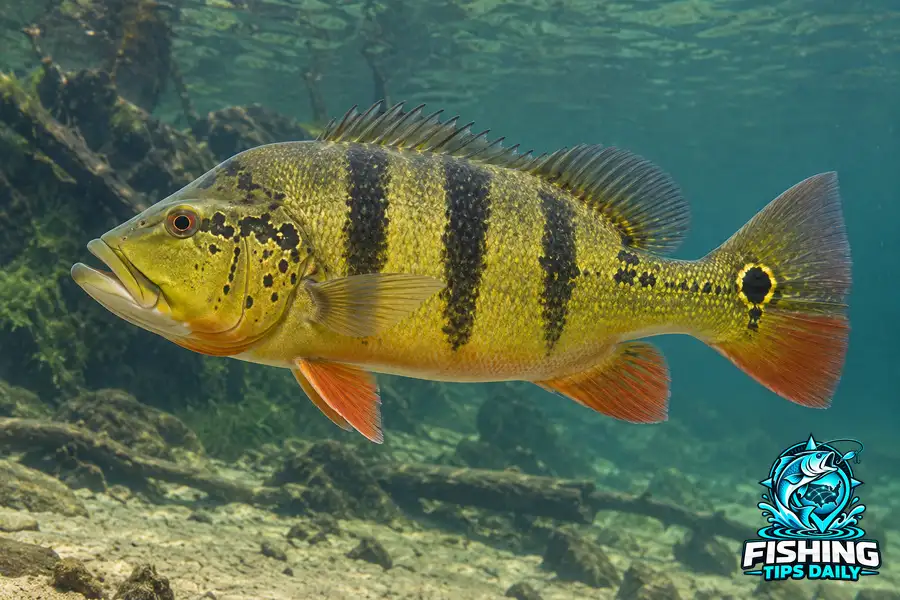
Identification
Three dark vertical bars cross a golden or greenish body. A round tail spot has a pale halo. These markings distinguish the peacock appearance from that of a typical largemouth bass, although the two can inhabit the same canal.
Size and Weight
Broad published maxima under Cichla ocellaris should be kept separate from Florida catches. Peacock names have historically covered more than one closely related form. The documented Florida example is a fish reported by state biologists, not an assertion about the current certified state record.
Where to Look
Canal bends, bridge shade, culverts and submerged structure are useful places to investigate. These are warmwater fish; deep excavated sections can provide refuge during cooler weather. Adults pursue other fish rather than relying mainly on bottom invertebrates.
Baits and Lures
Live shiners, jerkbaits, crankbaits and topwater plugs are established choices. Fly anglers can use streamers or poppers. Begin in daylight and cover likely structure; soft plastic worms are generally less reliable for peacocks than they are for largemouth bass.
A Cichlid with Parental Care
Peacock parents guard their offspring after spawning on a firm surface. A pair stationed together may be defending young rather than simply gathering to feed.
All Lakes With Butterfly Peacock Bass
Browse lakes and reservoirs with documented Butterfly Peacock Bass records, listed alphabetically. Records do not establish current abundance or public access. Check the evidence and managing authority for the water you choose.
Showing 1–12 of 12 lakes · Page 1 of 1
- Aepoeha Reservoir Kauai, HI
- De Mello Reservoir Kauai, HI
- Halenānahu Reservoir Kauai, HI
- Hanini Reservoir Kauai, HI
- Hoʻomaluhia Reservoir Honolulu, HI
- Huinawai Reservoir Kauai, HI
- ʻElua Reservoir Kauai, HI
- Lake Ida Palm Beach, FL
- Lake Osborne Palm Beach, FL
- Wahiawā Reservoir Honolulu, HI
- Wailua Reservoir Kauai, HI
- Waita Reservoir Kauai, HI