
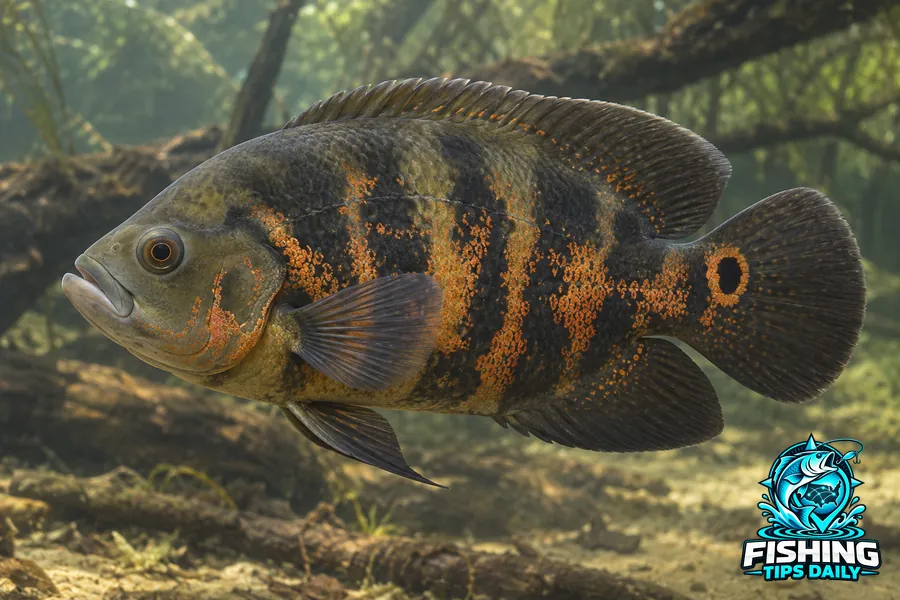
Range and Identity
Astronotus ocellatus occurs naturally in parts of the Amazon and Orinoco systems and has been introduced elsewhere. Aquarium varieties and introduced populations should retain that context. A fish kept in captivity does not establish native occurrence in nearby natural waters.
Habitat and Behavior
Adults favor quiet shallow waters with mud or sand, including canals and ponds. Recorded foods include small fishes, crayfish, worms and insect larvae. Feeding observations should be attached to the actual setting, because captive food provided by a keeper is not a direct description of wild diet.
Food and Life History
Captive observations document both parents cleaning a spawning surface and guarding eggs, then tending young after hatching. The compiled maxima are 45.7 centimeters total length and 1.6 kilograms. Those independent upper references should not be treated as the expected size of every aquarium adult.
Field Note
Keep captive breeding observations clearly labeled. They provide useful evidence of parental behavior without establishing identical timing under every natural water condition.
All Lakes With Oscar
Browse lakes and reservoirs with documented Oscar records, listed alphabetically. Records do not establish current abundance or public access. Check the evidence and managing authority for the water you choose.
Showing 1–2 of 2 lakes · Page 1 of 1
- Greenbelt Reservoir Donley, TX
- Wahiawā Reservoir Honolulu, HI