
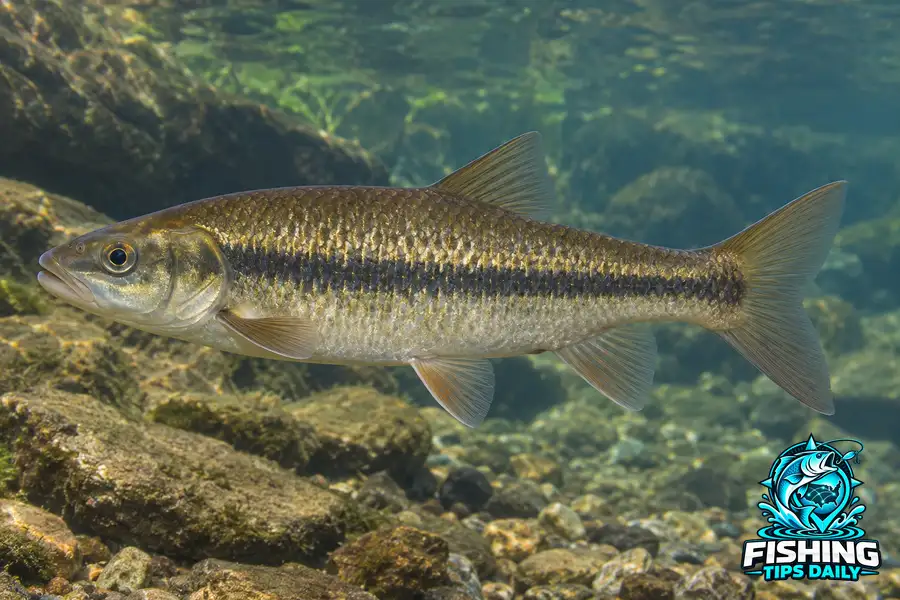
Identification
Compared with Creek Chub, Dixie Chub has a heavier body and a less sharply defined side stripe. The dorsal and tail-base spots can also be less distinct. Scale counts and the complete pattern provide a stronger identification than any single dark mark.
Stream Pools
The species occurs in Georgia, Florida and Alabama, from the Ochlockonee system west to the Tombigbee. Sandy and gravelly pools provide habitat. The drainage name is useful because several similar chubs live in southeastern streams.
Seasonal Appearance
Breeding males develop hooked head tubercles and can show pink or orange below with yellow fins. These changes are seasonal and should not be expected on every individual. The fifteen-centimeter maximum includes the tail and describes an upper size rather than a typical juvenile.
Compare the Whole Fish
Body depth, stripe definition, fin markings and locality together are more informative than a common name attached to a small minnow.
All Lakes With Dixie Chub
Browse lakes and reservoirs with documented Dixie Chub records, listed alphabetically. Records do not establish current abundance or public access. Check the evidence and managing authority for the water you choose.
No published lakes are currently linked to this species in our confirmed records.