
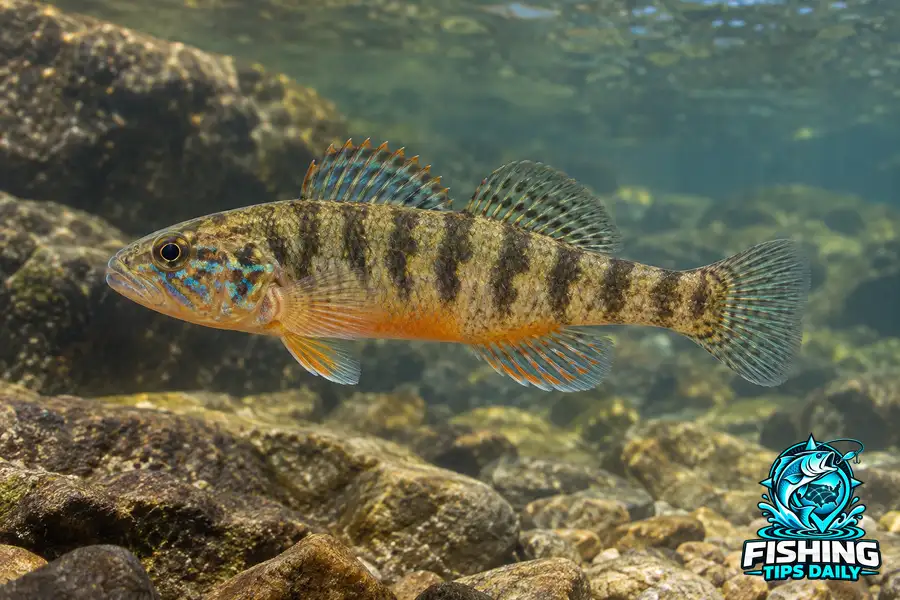
Identity
Etheostoma basilare was described in a study of relationships among barcheek darters. Older collections may have been filed under a broader related name. The collection locality and the original label should remain together when those historical records are reassessed.
Range
The species is associated with the upper Caney Fork and Collins River area within the Cumberland drainage. This is a much narrower statement than Tennessee as a whole. A superficially similar darter from another drainage requires an independent identification.
Size
The reference maximum is 5.5 centimeters measured to the base of the tail. This standard-length measurement excludes the tail fin. It is useful for comparing specimens measured in the same way, but should not be treated as interchangeable with an angler’s nose-to-tail measurement.
Keep the Tributary
A Caney Fork record is more useful when the actual tributary is retained. Drainage boundaries matter in a group with many geographically restricted species.
All Lakes With Corrugated Darter
Browse lakes and reservoirs with documented Corrugated Darter records, listed alphabetically. Records do not establish current abundance or public access. Check the evidence and managing authority for the water you choose.
No published lakes are currently linked to this species in our confirmed records.