
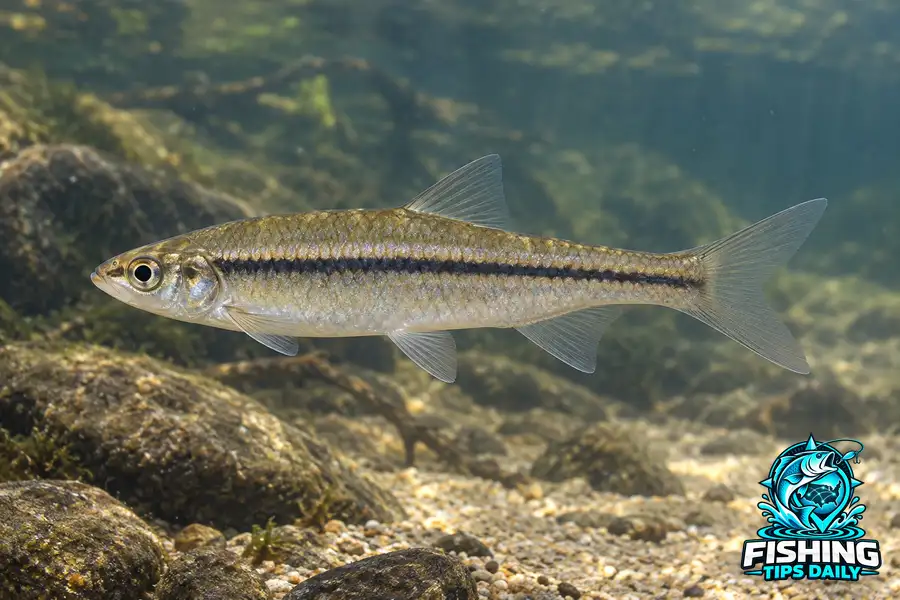
Identification
The snout and mouth are blunt. A strong black side stripe reaches a small wedge-shaped spot at the tail base. Dark pigment outlines the anal-fin rays; in the similar Weed Shiner, the corresponding pattern is concentrated on the last few rays. Those fine details require a sharp photograph.
Lowland Water
Coastal Shiner occupies slow water, including blackwater streams, backwaters and tide-influenced freshwater settings near the coast. Sandy pools and lakes are also reported. Its habitat is broader than an exclusively fast, clear upland stream description would suggest.
Food and Reproduction
The fish feeds in midwater on drifting material. Documented foods include insects, small crustaceans, algae and detritus. Alabama records describe spawning from April through June. The dark stripe remains useful while seasonal condition and lighting can alter the appearance of the rest of the body.
Look at the Anal Fin
The extent of dark pigment along its rays helps separate Coastal Shiner from a similar striped minnow. The side band alone may not settle an identification.
All Lakes With Coastal Shiner
Browse lakes and reservoirs with documented Coastal Shiner records, listed alphabetically. Records do not establish current abundance or public access. Check the evidence and managing authority for the water you choose.
No published lakes are currently linked to this species in our confirmed records.