
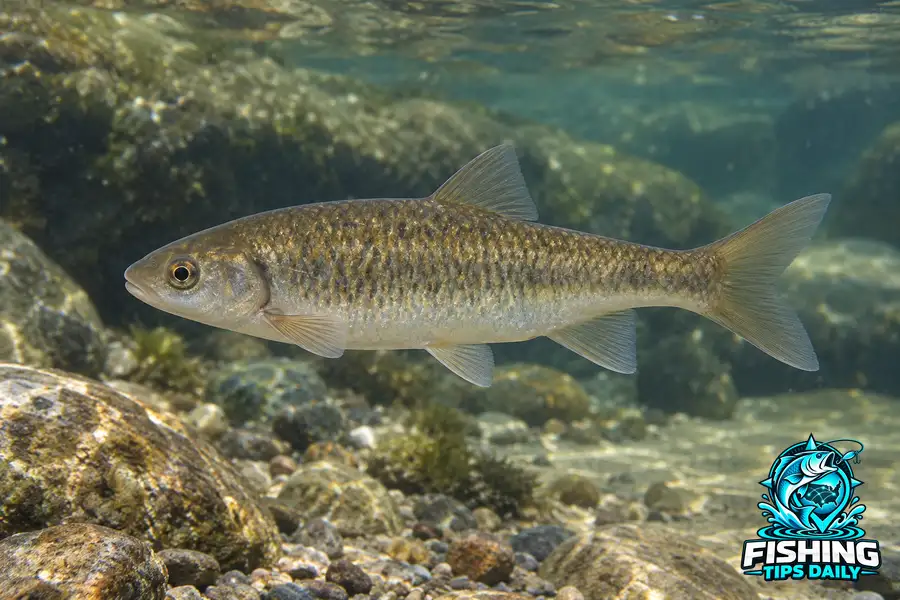
Identification
Look for a gray to steel-blue back above silvery lower sides. The small mouth sits slightly below the tip of the snout, and the dorsal fin begins behind the pelvic fins. Breeding fish may develop orange on the chin, gill-cover area and fin bases.
Size and Names
The listed length is a published reference value, not a verified present-day angling record. Older California Roach accounts treated several regional forms together; compare the scientific name and locality before applying a historical size report to a newly distinguished species.
Stream Setting
Rocky headwater pools provide a useful habitat starting point. Record the watershed as carefully as the fish’s appearance. A pool in another drainage can contain a different member of the roach group.
The Watershed Is Part of the Identification
A clear photo is most useful when accompanied by its drainage. Geography matters when closely related fish were once combined under a single familiar name.
All Lakes With California Roach
Browse lakes and reservoirs with documented California Roach records, listed alphabetically. Records do not establish current abundance or public access. Check the evidence and managing authority for the water you choose.
No published lakes are currently linked to this species in our confirmed records.