
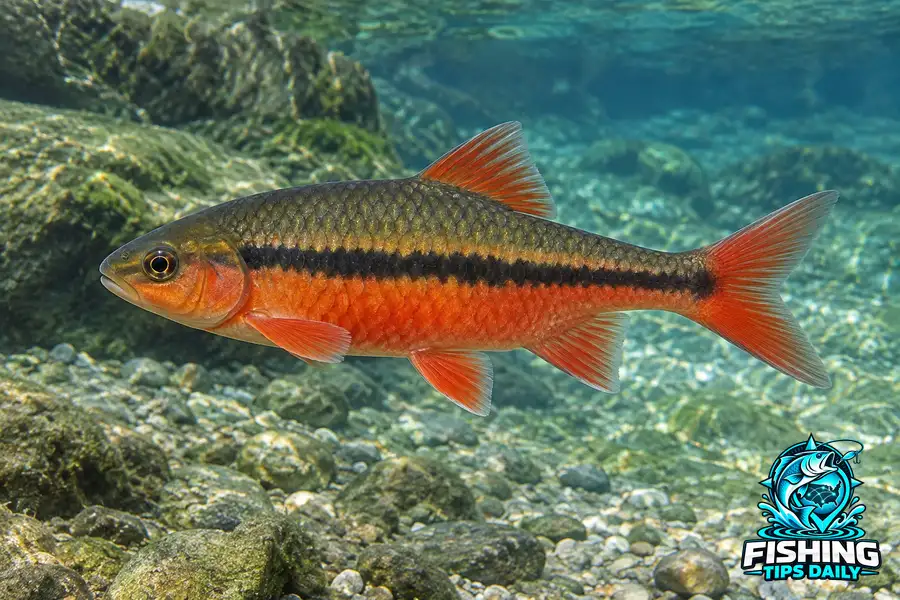
Appearance
The head and snout are short, with a small mouth set slightly below the tip. A dark side stripe ends in a tail-base spot or wedge. Larger fish, especially males, can show vivid scarlet along the lower body and near the dorsal-fin base.
Spring Habitat
The range includes parts of the middle Cumberland, especially the Caney Fork, and Tennessee drainages, with a Coosa-system locality also reported. Springs and their outflowing streams are characteristic. The condition of the spring source matters as well as the downstream channel.
Food and Size
Midge larvae are a principal food, supplemented by small crustaceans, worms, aquatic bugs and snails. The maximum total length is 7.8 centimeters. This small fish depends on prey and habitat features that can be difficult to notice during a quick visit to a spring stream.
Start with the Spring Source
Flow and habitat downstream depend on the spring supplying them. A useful Flame Chub observation includes that connection as well as the fish itself.
All Lakes With Flame Chub
Browse lakes and reservoirs with documented Flame Chub records, listed alphabetically. Records do not establish current abundance or public access. Check the evidence and managing authority for the water you choose.
No published lakes are currently linked to this species in our confirmed records.