
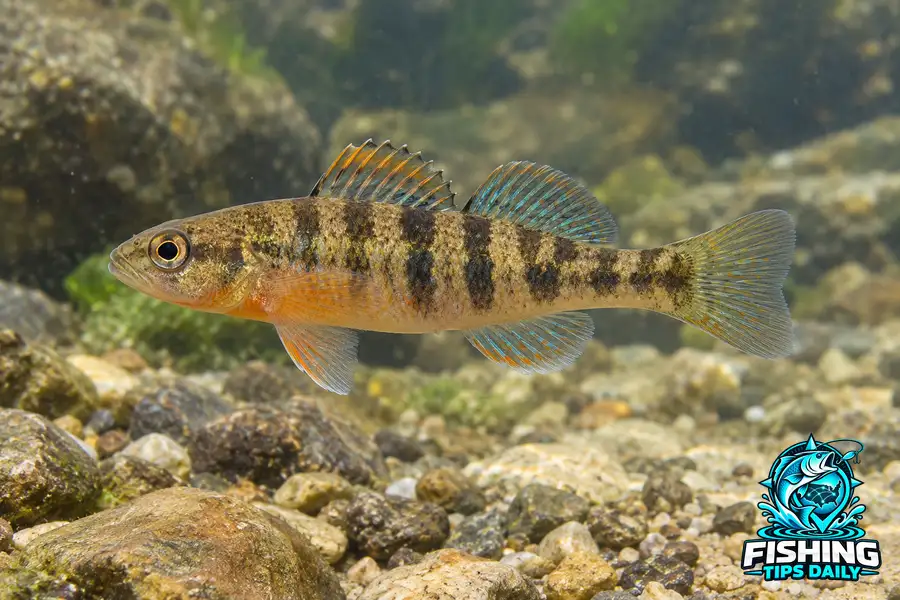
Identification
A broad connection joins the upper lip to the snout, and the pectoral fins are conspicuous. Dark markings cross the back and sides. Breeding males develop greenish to violet tones, including color on the breast and anal fin. Scale counts help distinguish this species from Banded Darter; color alone can be misleading.
Size and Weight
The reported maximum is 6.4 cm total length, approximately 2.5 inches, including the tail. Alabama adults are often considerably smaller. A dependable measured maximum weight was not established.
Habitat and Natural Food
Records include rocky riffles and sandy or gravelly runs near debris. In Alabama, individuals also occupy plants and algae in flowing channels. Midge and blackfly larvae, together with mayfly nymphs, are recorded foods.
Fishing Context
No species-specific bait or artificial-lure method was verified for this small darter. Its insect diet describes feeding in the stream and does not establish a recommended bait.
A Seasonal Change in Color
The male’s green and violet coloring becomes especially useful to notice during the breeding season. A fish outside that season can look much less vivid, so identification also depends on structural features and markings.
All Lakes With Brighteye Darter
Browse lakes and reservoirs with documented Brighteye Darter records, listed alphabetically. Records do not establish current abundance or public access. Check the evidence and managing authority for the water you choose.
No published lakes are currently linked to this species in our confirmed records.