
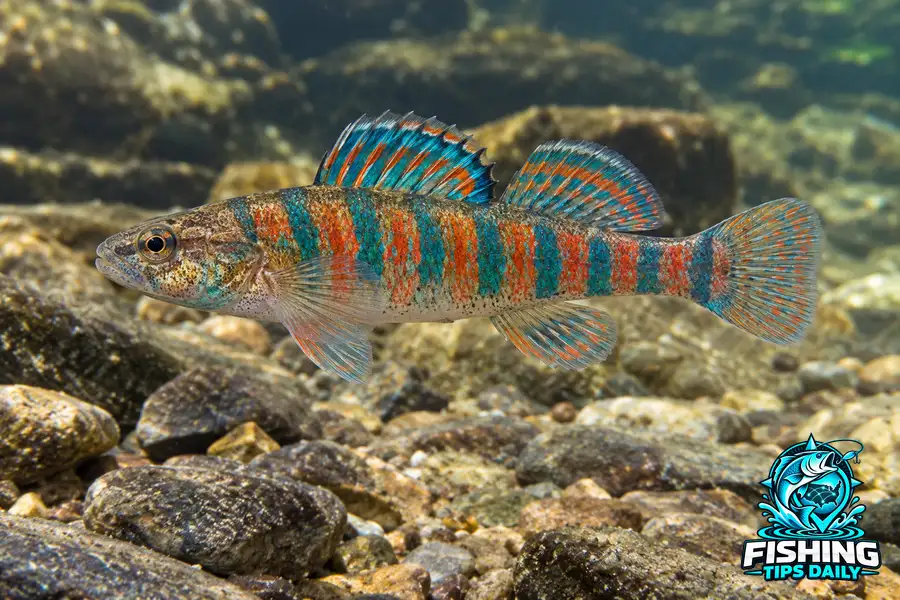
Identification
Breeding males display alternating blue-green and red-orange markings. Females are more subdued, with olive and dark tones. Color varies with sex and season, so a less colorful fish should not be ruled out on that basis alone.
Size
The published maximum is ten centimeters including the tail. Many fish encountered in surveys are smaller; vivid coloration is not evidence of unusually large size.
Feeding and Spawning
Candy Darters pick aquatic invertebrates from stream habitat, including mayfly and caddisfly larvae. During spring spawning, eggs are placed in gravel and left without parental guarding.
Conservation in the Stream
Introduced Variegate Darters can hybridize with Candy Darters. Avoid moving baitfish between waters, and observe native riffle fishes without collecting them or rearranging spawning gravel.
Keeping a Colorful Lineage Distinct
Habitat quality is only part of the conservation story. Preventing fish introductions also helps protect Candy Darter from losing its distinct identity through hybridization.
All Lakes With Candy Darter
Browse lakes and reservoirs with documented Candy Darter records, listed alphabetically. Records do not establish current abundance or public access. Check the evidence and managing authority for the water you choose.
No published lakes are currently linked to this species in our confirmed records.