
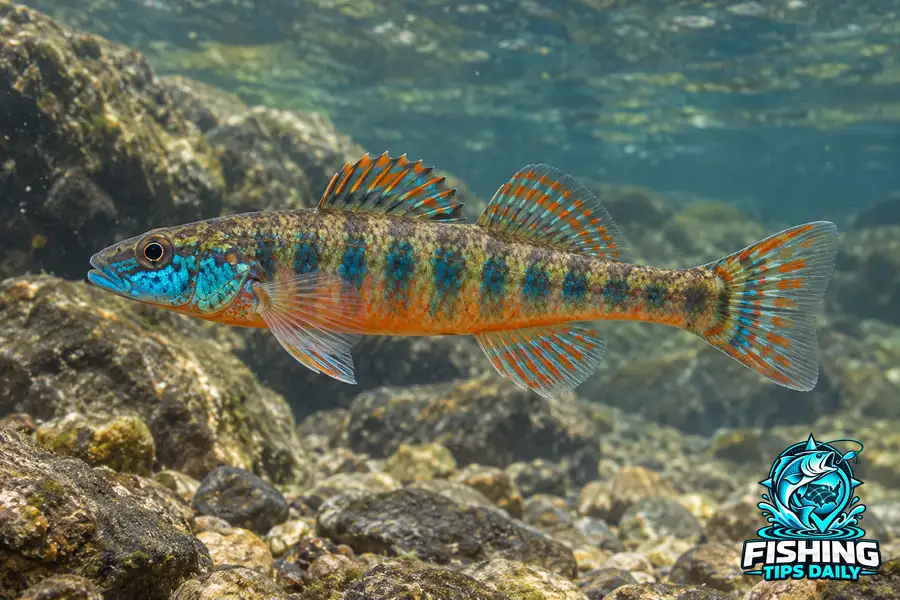
Identification
The blue breeding mask covers the lower face, lips, underside of the head and gill-cover region. Cheeks are fully or nearly fully scaled. The soft dorsal and anal fins remain dark rather than carrying orange spots or blue membranes. Several traits together distinguish it from other colorful darters.
Size and Weight
Reported maximum standard lengths are 4.8 cm for males and 4.5 cm for females, approximately 1.9 and 1.8 inches. These measurements end before the tail fin. A dependable maximum body weight was not verified.
Habitat and Reproduction
Sandy or fine-gravel areas with slow to moderate flow provide habitat, including runs and pool margins near riffles. Breeding observations associate males and pairs with gravelly patches, while solitary females may occupy sandier areas. Eggs are buried in small sandy spaces among gravel.
Observation and Conservation
The species was recognized for conservation purposes before receiving its formal scientific name in 2009. Its restricted river-system range makes accurate location records valuable. A species-specific wild diet breakdown and recreational bait recommendation were not verified for this profile.
Disappearing Into the Bottom
A threatened Bluemask Darter can shimmy down into soft substrate until it is concealed. This behavior makes the sandy bottom more than a surface to rest on: it also provides cover. A fish disappearing from view has not necessarily left the area.
All Lakes With Bluemask Darter
Browse lakes and reservoirs with documented Bluemask Darter records, listed alphabetically. Records do not establish current abundance or public access. Check the evidence and managing authority for the water you choose.
No published lakes are currently linked to this species in our confirmed records.