
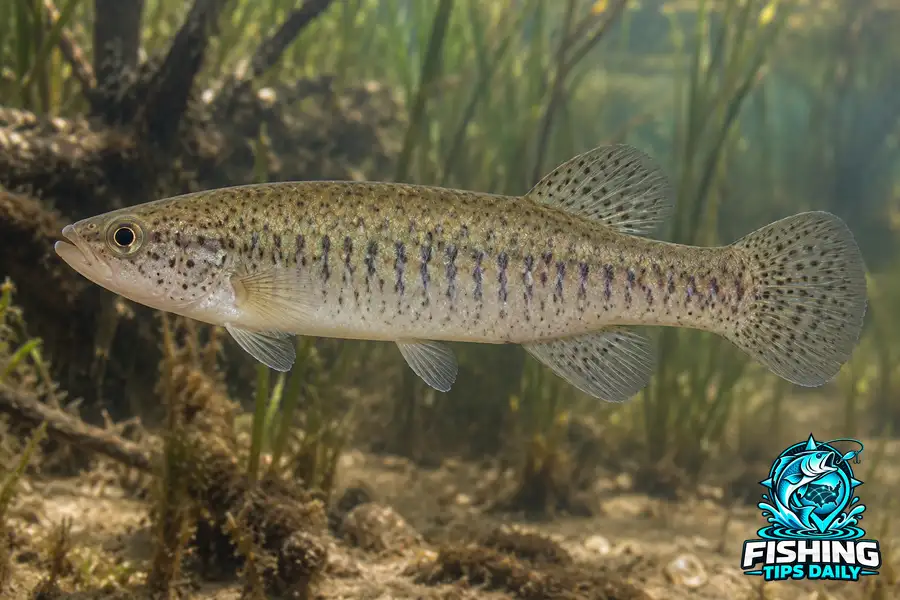
Identification
Males have numerous narrow dark bars, with pale spots toward the rear of the body and on the fins. Females instead show dark spots and a marking on the dorsal fin. A broad mouth and the position of the dorsal fin help separate this fish from superficially similar coastal killifishes.
Size and Weight
The reported upper total length is 7.5 cm, approximately 3 inches, including the tail. Some summaries give a smaller 6.5 cm maximum in their main size field while also recording the larger value in their biology notes. No dependable maximum weight is included here.
Habitat and Natural Food
Shallow coastal margins provide its characteristic setting. It feeds on small aquatic insects and isopods, the flattened crustaceans found in many bottom and shoreline habitats. Its name should not be taken to mean that it occupies every inland bayou.
Fishing Context
This small marsh fish is better approached as a species to recognize than as a conventional sport-fishing target. A bait recommendation cannot be inferred simply from its natural foods. If small fish are encountered during permitted bait collection, distinguish killifish species before retaining or moving them.
Two Patterns, One Species
A barred male and a spotted female can initially look like different kinds of fish. Recognizing this difference makes the body pattern useful without letting a single marking determine the identification.
All Lakes With Bayou Killifish
Browse lakes and reservoirs with documented Bayou Killifish records, listed alphabetically. Records do not establish current abundance or public access. Check the evidence and managing authority for the water you choose.
No published lakes are currently linked to this species in our confirmed records.