
Identification
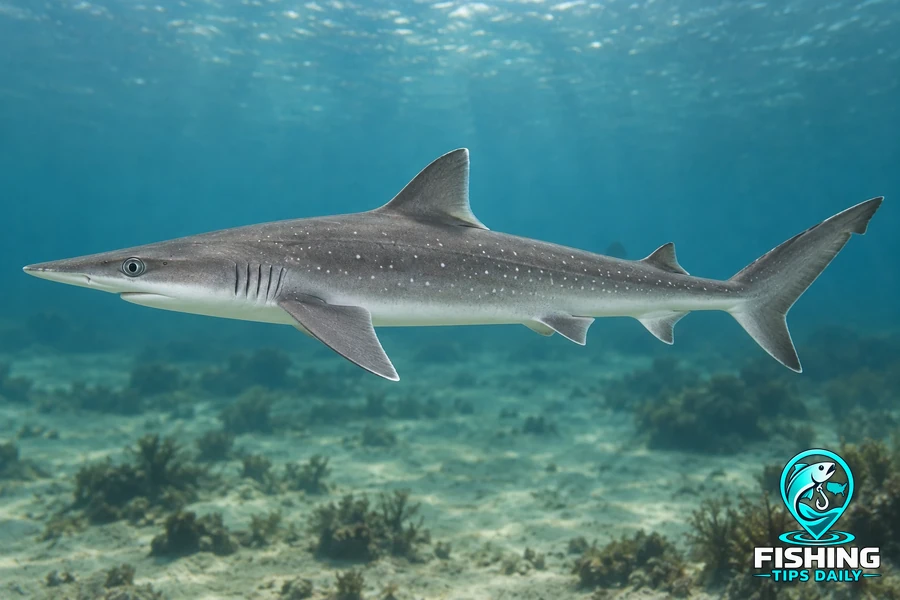
Look for a slender form, pointed snout and the position of the second dorsal fin over the anal-fin region. White spots can help on adults, but they are not a complete identification test. Young coastal sharks can be particularly difficult to distinguish.
Size and Weight
NOAA’s overview gives an upper length of about four feet, while a species summary reports 110 cm total length. A Texas record listing documents an 18.10-pound fish, approximately 8.21 kg. The weight is a documented regional record, not a claim of the greatest weight worldwide; it is separate from the length figure.
Habitat and Natural Food
Coastal waters and bays provide feeding and nursery habitat. Its diet includes small fishes and invertebrates. Growth and maturation differ between populations, so one age-at-size value should not be applied throughout the range.
Fishing Context
A Texas record documents a catch using sardine, which is a supported bait example rather than proof of a best bait. Identify any shark carefully and check the rules for the location before targeting it; similar coastal species can have different requirements.
Spots on a Small Coastal Shark
The pale spots are a memorable feature of many adult Atlantic Sharpnose Sharks. They are useful alongside the pointed snout and fin arrangement, rather than as a stand-alone identification shortcut for every age or individual.
All Lakes With Atlantic Sharpnose Shark
Browse lakes and reservoirs with documented Atlantic Sharpnose Shark records, listed alphabetically. Records do not establish current abundance or public access. Check the evidence and managing authority for the water you choose.
No published lakes are currently linked to this species in our confirmed records.