
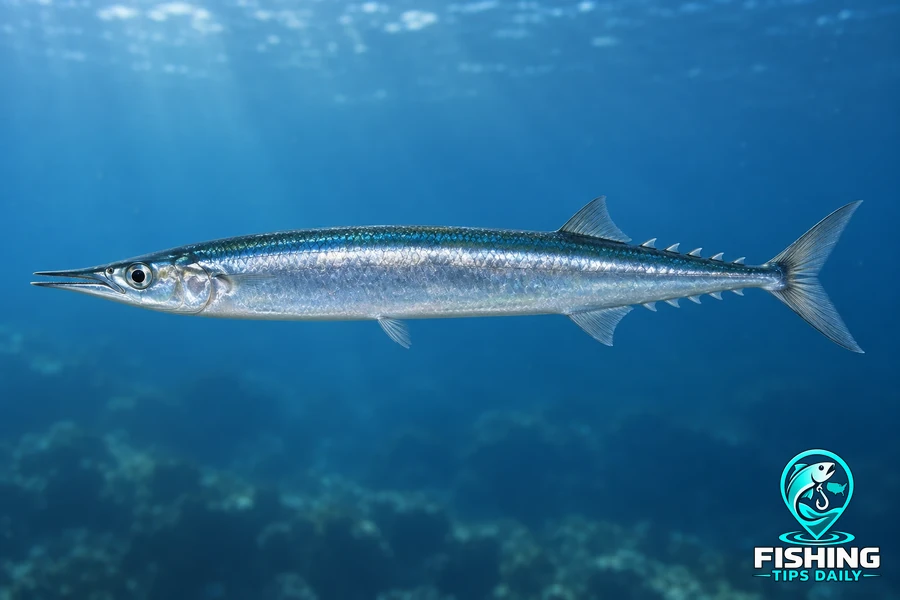
Identification
Both jaws are elongated, with the lower jaw projecting slightly farther. Small finlets follow the dorsal and anal fins toward the forked tail. Those finlets are more useful than overall slenderness when distinguishing a saury from a needlefish.
Size and Weight
A species summary reports 50 cm total length, about 19.7 inches, with a common length of 32 cm. A Caribbean database lists 85 cm without supporting measurement detail; that conflicting figure is not treated here as an established maximum. A dependable maximum weight was not verified.
Habitat and Natural Food
Schools occupy oceanic surface waters and may approach shore in large numbers. Food includes drifting crustaceans as well as fish eggs, larvae and small fishes. Saury in turn feed larger predators, including tunas and billfishes.
Fishing and Observation
Schooling behavior and a role as prey have made saury useful to fisheries, including as bait. That use does not establish a particular recreational lure for catching this species. Finlets and jaw shape remain the key features to examine in a specimen.
The Finlets Give It Away
A thin body and long jaws can suggest a needlefish at first glance. The series of small fins behind the main dorsal and anal fins reveals the saury body plan. This is a practical identification detail even when color has faded after capture.
All Lakes With Atlantic Saury
Browse lakes and reservoirs with documented Atlantic Saury records, listed alphabetically. Records do not establish current abundance or public access. Check the evidence and managing authority for the water you choose.
No published lakes are currently linked to this species in our confirmed records.