
Identification
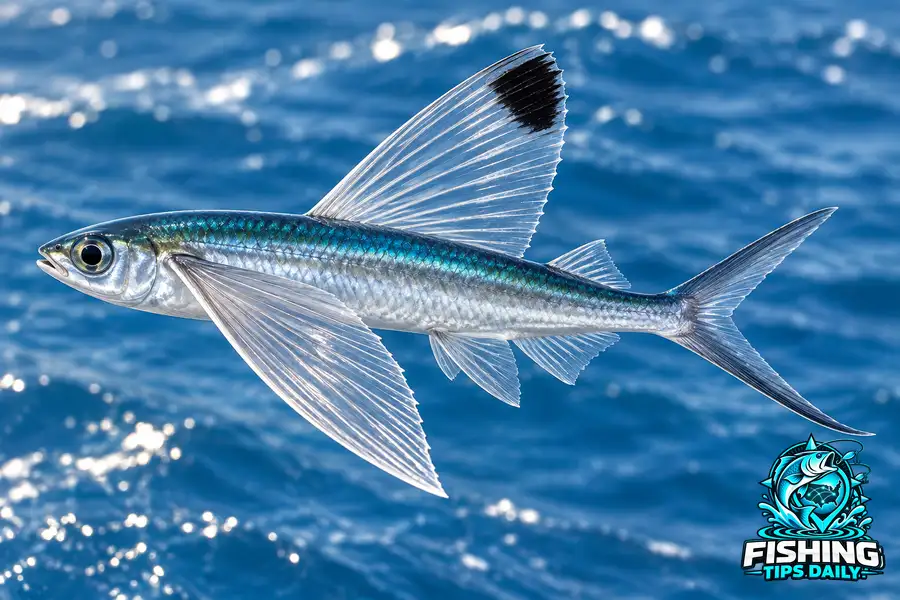
The high dorsal fin is the most conspicuous feature. Pectoral fins are moderately elongated, while the other fins are much paler than the dorsal sail. This combination matters because a general flyingfish silhouette cannot identify the species.
Size and Weight
A Caribbean species account lists an upper length of 15.5 cm, approximately 6.1 inches. A separate summary gives 10.3 cm standard length, excluding the tail. Measurement conventions differ, so these numbers are not presented as equivalent. No dependable maximum weight was established.
Habitat and Distribution
This pelagic fish lives near the sea surface. Western Atlantic records extend through warm coastal-ocean waters and the Caribbean region. An oceanic distribution does not establish residence in any inland lake, even when a database contains an association needing review.
Observation
A photograph showing the dorsal sail and the extent of the pectoral fins is more useful than a distant view of a fish above the waves. Neither the common name nor its ability to leave the water establishes a best bait or lure, and no species-specific angling recommendation was verified.
A Sail Above the Back
Many flyingfishes attract attention with their enlarged pectoral fins. On this species, the unusually high, dark dorsal fin provides an additional identifying feature. Looking at both sets of fins helps avoid confusing it with other Atlantic flyingfishes.
All Lakes With Atlantic Sailfin Flyingfish
Browse lakes and reservoirs with documented Atlantic Sailfin Flyingfish records, listed alphabetically. Records do not establish current abundance or public access. Check the evidence and managing authority for the water you choose.
No published lakes are currently linked to this species in our confirmed records.