
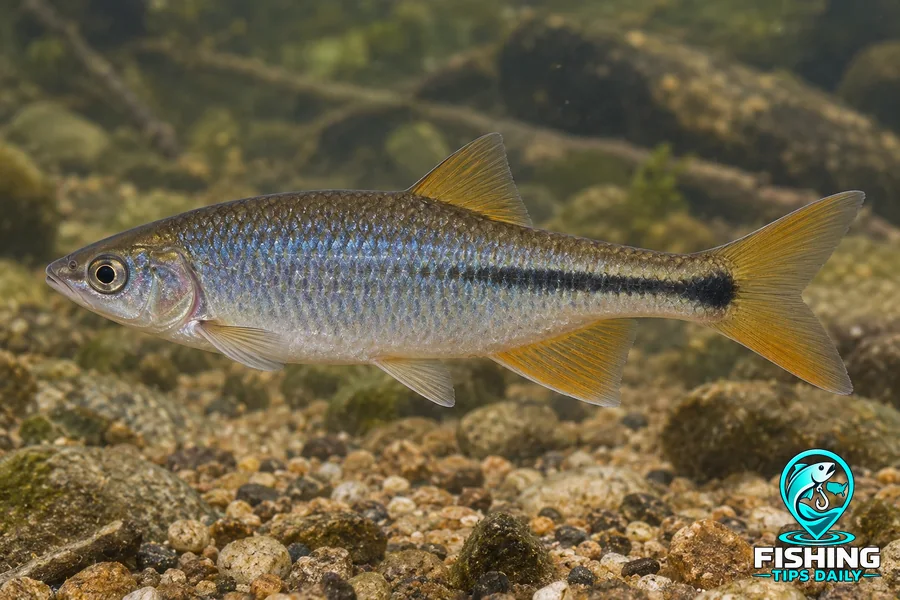
Identification
A pointed snout and a dark rear-body stripe ending near the tail base are useful clues. Breeding males develop stronger blue body tones and contrasting fin colors.
Identification should combine body features with drainage information. A small, colorful shiner from elsewhere in Georgia is not automatically this species.
Habitat and Natural Food
The range centers on the upper Altamaha system, including the Oconee and Ocmulgee drainages. Pools with rocky or sandy bottoms in smaller streams and rivers provide habitat.
Aquatic and terrestrial insects carried in the current are considered likely foods. Because that diet description is tentative, it is not presented as a measured feeding study or a proven bait recommendation.
Size and Weight
A reported maximum total length is 11 centimeters, about 4.3 inches. This includes the tail and should not be compared directly with standard length, which stops at the tail base.
A typical weight was not verified.
Conservation and Fishing Context
Stream sedimentation can affect habitat quality. The restricted range makes the condition of individual tributaries meaningful even when the entire drainage appears large on a map.
No recreational tackle list is supplied for this shiner. Check local protections before any collection, and leave fish in their native drainage.
A Fish With a Very Local Address
The upper Altamaha is not just one place to encounter this shiner; it defines its natural range. That close connection to one drainage makes clean tributaries and accurate identification especially important.
All Lakes With Altamaha Shiner
Browse lakes and reservoirs with documented Altamaha Shiner records, listed alphabetically. Records do not establish current abundance or public access. Check the evidence and managing authority for the water you choose.
No published lakes are currently linked to this species in our confirmed records.