
Crappie fishing
Winter Crappie: Find the Level and Keep the Bait There
Winter crappie fishing often rewards precise depth control more than constant movement. This guide focuses on open water. Begin with reachable cover or a depth change, find the level fish use, and make the bait easy to approach.
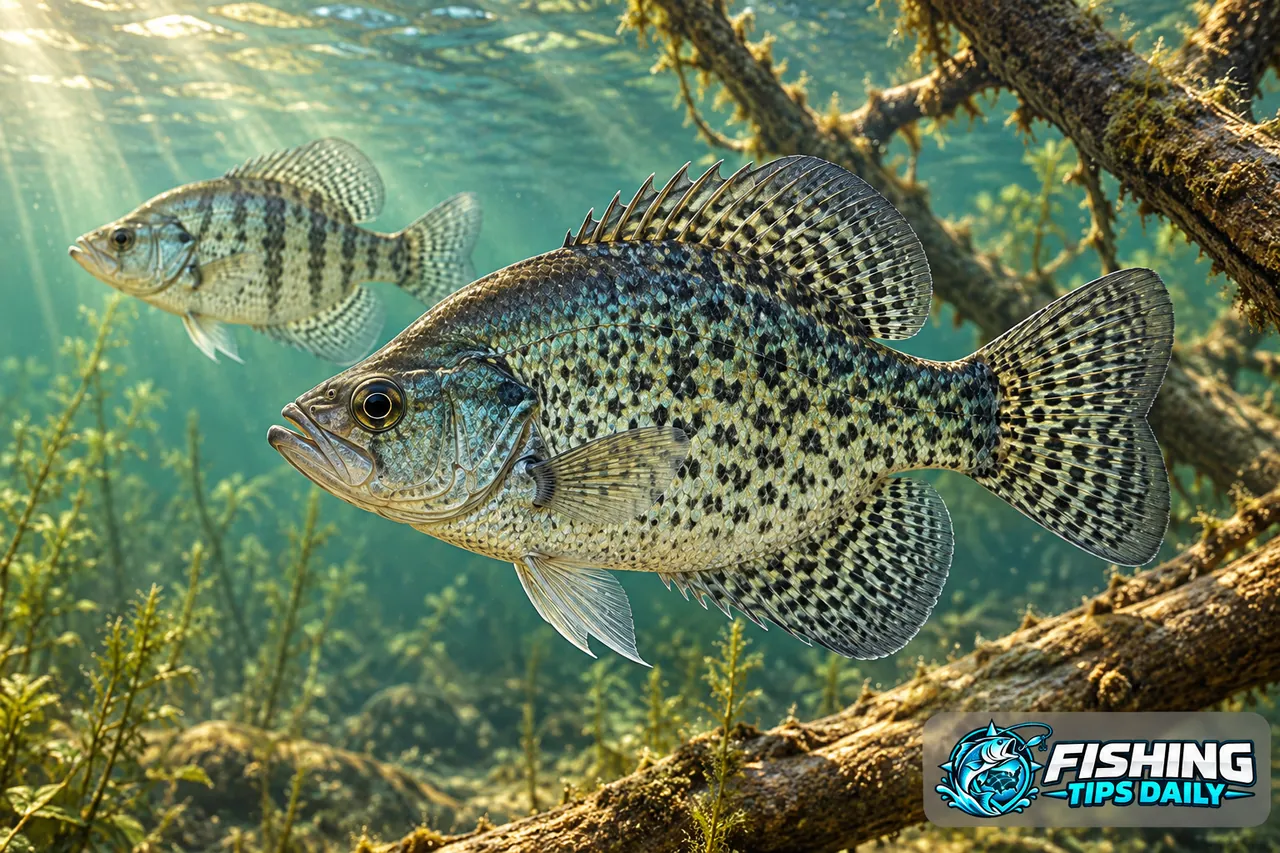
Find a place you can fish accurately
Brush beside a channel, standing timber, dock cover, or a protected deeper edge can be useful starting places. The best choice depends on the individual water. Some fisheries concentrate crappie around cover in fall and winter, but that does not mean every lake follows one depth rule.
From the bank, select cover or a drop within casting range. From a boat, position so wind does not sweep your bait away before it reaches the target. Deep water is not automatically productive if fish or forage are somewhere else.
Look for fish above and beside the cover
With sonar, compare the top of the cover with nearby returns and choose a presentation level. Without sonar, use a float setting or a repeatable jig countdown and change depth in measured steps. Start above the likely holding zone so the first test does not bury the hook in branches.
After a bite, repeat the level before moving lower. Crappie can be suspended and may rise to take a bait. A bottom-only approach can pass below them even when the cast lands in the right general place.

Use a compact bait and controlled motion
A small jig, hair jig, or legal minnow can be a useful choice. Choose enough weight to reach and hold the target level under the actual wind and flow. An extremely light jig is not helpful if the line bows and the bait never reaches the fish.
Try holding still, then add a small movement and another pause. Watch for a line jump, a sideways float, or a feeling of unexpected lightness. Repeated large lifts can pull the bait out of the small zone you worked to find.
Repeat the location without crowding it
Mark a productive position or remember a bank landmark and casting angle. Check adjacent cover at the same depth. If bites stop, test a small depth change and nearby edge before making a long move. A school may shift without leaving the area entirely.
Cold air, wind, and cold water shorten the margin for mistakes. Wear appropriate flotation for the situation, carry dry layers, and choose safe footing. Open-water tactics are not ice-safety advice; do not use a fishing pattern or a calendar date to judge whether ice can be traveled on.
Quick comparison
| Situation | Presentation | Depth control |
|---|---|---|
| Vertical access above cover | Single jig | Watch line and maintain contact |
| Bank fishing to deeper cover | Slip float | Adjust the stop in small steps |
| Light wind, open lane | Counted-down jig | Repeat cast and retrieve speed |
| Strong drift across the target | Heavier suitable jig or new position | Keep the bait from sweeping past |
A measured depth search
At a legal dock or bank access, set a slip float to fish above the suspected cover. Make several controlled presentations. Lower the bait in small steps until you find contact or bites, then raise it enough to fish cleanly. Record the float setting. If you catch a fish at that level, repeat it on nearby cover before changing bait style.
When it is not working
- No bites at bottom
- Search above it; the school may be suspended.
- Jig moves too much
- Reduce rod motion and account for boat drift.
- One depth works only briefly
- Check whether wind, drift, or fish position changed.
Common questions
Must winter crappie be very deep?
No. Depth varies by water, weather, cover, and forage. Fish location matters more than a seasonal number.
Can a bank angler catch them?
Yes, where useful holding water is legally reachable and the bait can be controlled.