
Trolling & Flat-Line Trolling
Trolling moves an offering behind a moving boat along a deliberate route. Flat-line trolling is the simplest form: line runs directly from the rod to the lure without a separate depth-control device.
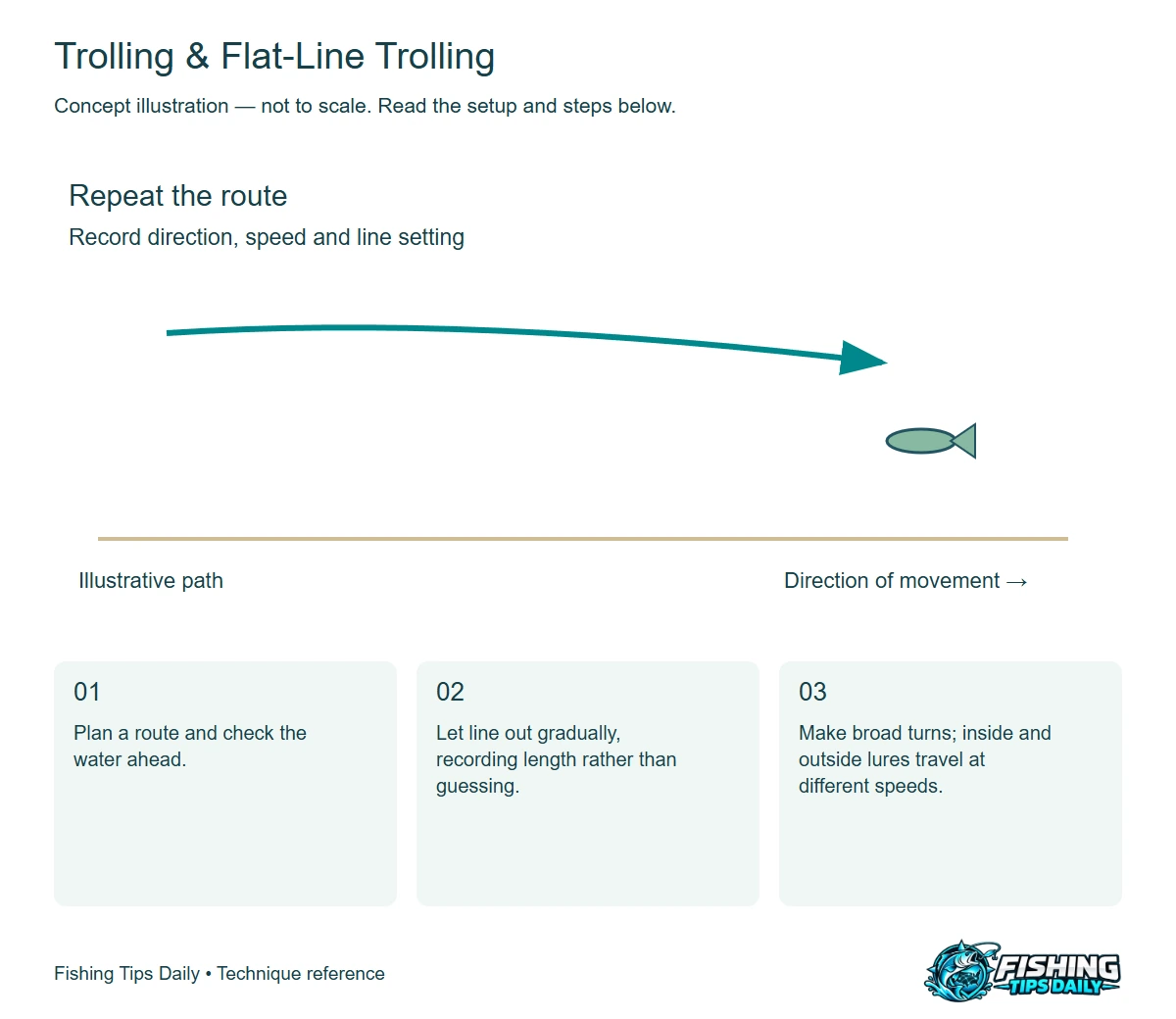
Build a setup that does the job.
Use securely mounted holders, an outfit rated for the lure load, and enough line capacity. A line counter helps repeat a setting. Test action beside the boat before deploying; a GPS speed is not necessarily speed through current.
Make the first test close enough to observe. Check the connection, the hook opening, and whether the offering follows the intended path. Correct a fouled or poorly balanced setup before adding distance.
How to fish it, step by step.
- Plan a route and check the water ahead.
- Test the lure at the chosen pace.
- Let line out gradually, recording length rather than guessing.
- Make broad turns; inside and outside lures travel at different speeds.
- After a bite, repeat direction, line setting, and route before changing several variables.
A useful first test.
Along a reservoir contour, run one known setting and watch the bottom. When fish strike on one direction of travel, repeat that direction to test the role of wind or current.
Keep the productive detail repeatable: position, depth, speed, or pause. Change one of those at a time so you can tell what improved the presentation.
Variations—and what changes.
Long-line trolling describes a greater setback, not a universal depth rule. Use planer boards, downriggers, lead core, or divers when the intended job requires them.
Read the symptom before changing everything.
Lure stops working
Check weeds or speed outside its action range.
Bottom contact changes in turns
Inside lines slow and may sink; allow room and retrieve before a sudden shallowing.
Know when to change methods.
If the offering cannot reach the target, repeatedly snags, or demands equipment you cannot control comfortably, choose another presentation from this family. Keep the location clue you learned; changing a rig does not require starting the whole search over.
Use tackle and bait permitted on the water, and plan safe access and fish handling. The illustrations explain concepts; they do not replace equipment instructions or current local rules.